🔔 Announcement: American Trucking Insurance is now a part of Valley!
See details
🔔 Announcement: American Trucking Insurance is now a part of Valley!
See details

How Winter Conditions Impact Your Insurance Claims

Cameron Pechia / Jan 17, 2026
How Winter Conditions Impact Your Insurance Claims
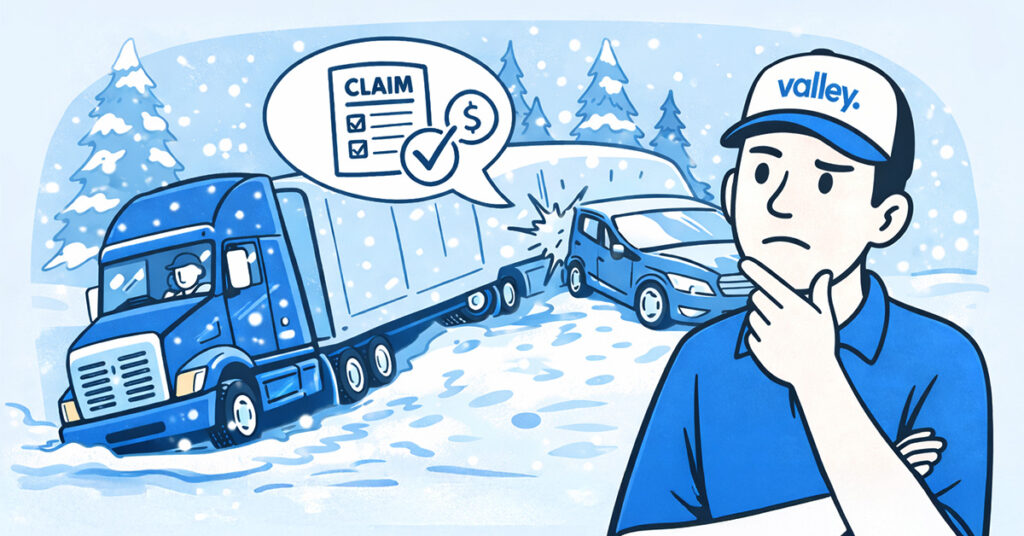
Winter is not just a driving problem for fleets. It is an insurance problem, a claims problem, and often a profitability problem. Snow, ice, freezing rain, and extreme cold increase accident frequency, claim severity, and insurer scrutiny across trucking operations. Fleets that treat winter as routine weather often learn the hard way that insurers treat it as elevated risk.
Understanding how winter conditions impact trucking insurance claims helps fleet owners reduce losses, avoid coverage surprises, and protect renewal terms.
Why winter weather drives more trucking insurance claims
Winter conditions stack multiple risk factors at once. Traction is reduced, stopping distances increase, visibility drops, and drivers are forced to make more judgment calls under pressure. At the same time, cold weather stresses equipment and increases the likelihood of mechanical failures.
From an insurer’s perspective, winter increases both frequency and severity of claims. More accidents happen, and when they do, recovery costs, towing, cargo loss, and third-party damage are usually higher. Federal Motor Carrier Safety Administration winter driving guidance confirms that adverse weather significantly raises commercial vehicle crash risk.
Common winter-related trucking insurance claims
Vehicle collisions and chain-reaction crashes
Rear-end collisions, sideswipes, and multi-vehicle accidents spike during winter months. Even when roads are clearly hazardous, insurers still evaluate whether the driver adjusted speed, following distance, and decision-making to conditions. Weather alone rarely eliminates fault.
Claims that are labeled preventable carry long-term consequences, especially for fleets with repeated winter losses.
Jackknife and rollover incidents
Ice-covered roads, uneven snowpack, and sudden braking increase the likelihood of jackknifes and rollovers. These losses are often severe, involving tractor and trailer damage, cargo loss, and extended downtime. National Highway Traffic Safety Administration research highlights the elevated rollover risk in poor weather conditions.
Cargo damage and spoilage
Cold weather claims frequently involve cargo rather than collisions. Freezing temperatures can destroy temperature-sensitive freight, while winter delays can trigger spoilage or contractual penalties. Refrigeration unit failures are more common in extreme cold, and not all cargo policies respond the way fleets expect. Cargo insurance coverage details outlined by the Insurance Information Institute show why policy language matters.
Mechanical breakdown and roadside losses
Cold weather accelerates failures in batteries, air brake systems, fuel lines, and DEF components. While standard trucking policies do not cover routine breakdowns, resulting damage, towing, recovery, and storage often generate insurance claims. Poor maintenance documentation can complicate these claims quickly.
How insurers evaluate winter trucking claims
Insurers do not give winter a free pass. Adjusters focus on whether the fleet took reasonable steps to manage known seasonal risks. Maintenance records, pre-trip inspections, winter driver training, route planning, and safety policies all factor into claim outcomes.
The FMCSA emphasizes preparedness and equipment readiness for winter operations. Fleets that cannot demonstrate preparation are more likely to face disputed claims or unfavorable loss classifications.
Coverage gaps winter exposes
Winter losses reveal weaknesses in insurance programs that may go unnoticed the rest of the year. Common gaps include insufficient physical damage limits for total losses, cargo exclusions tied to temperature control, lack of coverage for extended downtime, and deductibles that become painful during frequent weather-related claims.
Many fleets only discover these issues after a major winter loss, when policy changes are no longer an option.
Reducing winter claim frequency and severity
Insurance carriers respond to patterns. Fleets that consistently document winter preparedness tend to see better claim outcomes and more stable renewals.
Effective winter risk controls include documented seasonal driver training, enhanced inspection routines, cold-weather maintenance schedules, conservative routing decisions, and real-time weather monitoring. Resources from the American Trucking Associations support winter safety best practices fleets can adopt.
Reducing even a small number of winter claims can materially improve long-term insurance costs.
Preparing your insurance program for winter operations
Winter is predictable. Insurance surprises should not be.
Before winter conditions peak, fleets should review physical damage and cargo limits, confirm towing and recovery coverage, understand how deductibles apply to weather-related losses, and align operations with insurer expectations. A proactive review positions the fleet as a better risk even when winter claims occur.
Winter will always bring challenges. The difference between manageable losses and expensive insurance problems usually comes down to preparation.
FAQ
Does bad weather automatically excuse a trucking accident?
- No. Insurers still evaluate driver behavior and preventability regardless of conditions.
Are winter-related claims more expensive?
- Yes. They typically involve higher severity, longer downtime, and more third-party exposure.
Is frozen cargo always covered?
- No. Coverage depends on policy wording, limits, and exclusions.
Do winter claims affect renewal pricing?
- Yes. Winter loss history directly impacts premiums and underwriting decisions.
Are mechanical failures covered under trucking insurance?
- Routine breakdowns are not, but resulting damage and recovery costs often are.
Should fleets change coverage before winter?
- Yes. Adjusting limits, deductibles, and endorsements before winter reduces surprises.
If your fleet operates in snow, ice, or extreme cold, now is the time to reassess winter exposures, compliance expectations, and coverage limits with Valley Trucking Insurance before the next storm turns into a costly claim.

Smarter Coverage. Real Support. No Hassle.