🔔 Announcement: American Trucking Insurance is now a part of Valley!
See details
🔔 Announcement: American Trucking Insurance is now a part of Valley!
See details

Why Two Trucking Companies with the Same Trucks Pay Different Insurance Rates

Cameron Pechia / Feb 20, 2026
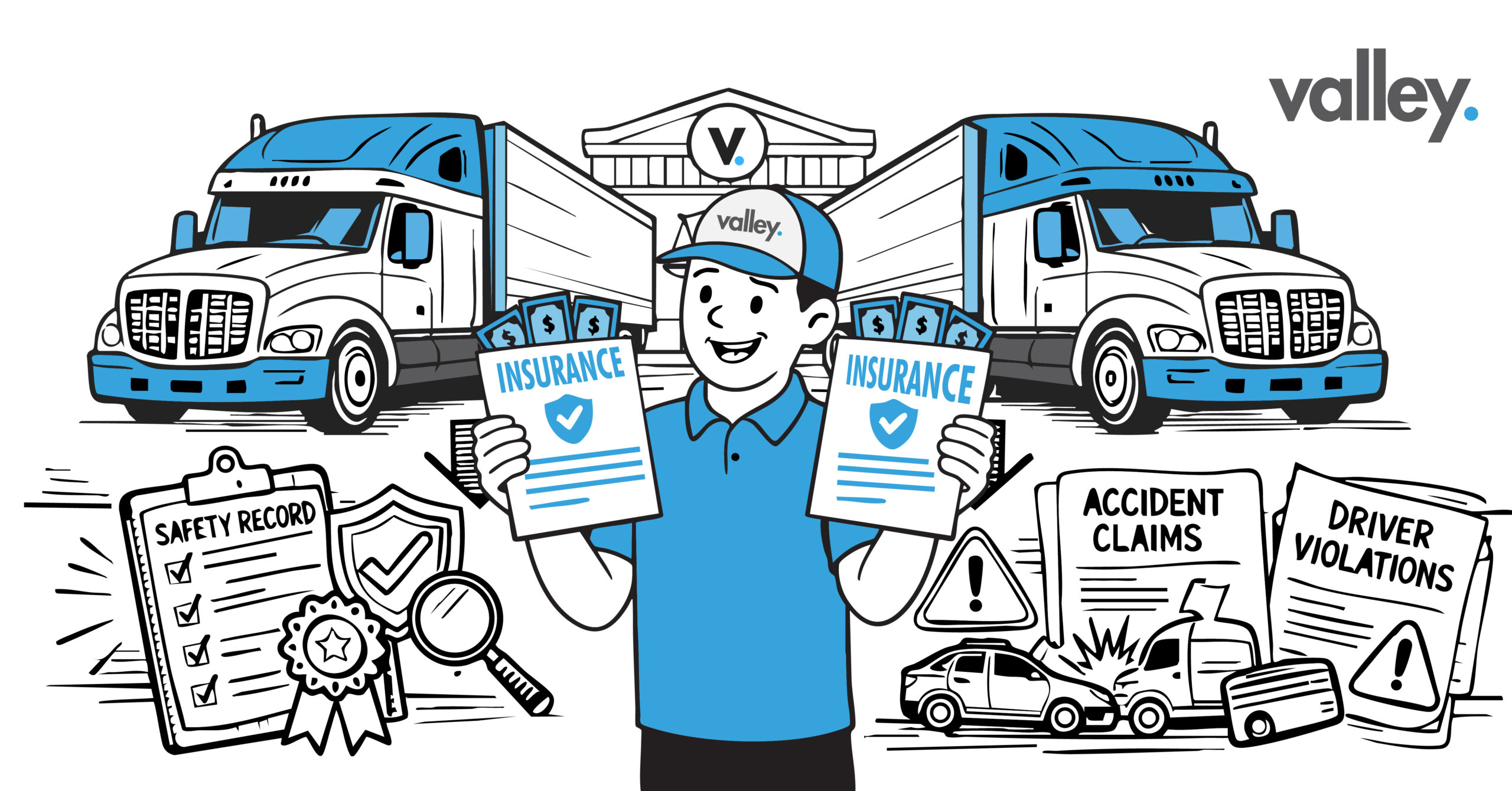
Key Takeaway: If you have ever compared notes with another fleet owner and wondered why their premium is thousands less than yours, you are not alone. Many operators ask why two trucking companies pay different insurance rates when they are running the same tractors, the same trailers, and sometimes even the same lanes.
The short answer is this: insurance pricing is based on risk, not just equipment. Two trucking companies with identical trucks can pay very different trucking insurance rates because insurers evaluate the entire risk profile of the business. That includes safety history, driver quality, claims experience, cargo type, operating radius, authority age, and financial stability. The truck is only one piece of the underwriting puzzle.
Why This Matters
Premium differences are not random. They are signals.
If your rates are higher than a similar fleet, it usually means one or more risk factors in your operation concern the insurance company. Understanding those factors gives you leverage. It allows you to fix what can be fixed and explain what needs context.
Let’s break down what truly drives the difference.
Safety Scores and CSA Data
One of the biggest pricing factors is your safety record.
Insurance underwriters review data from the Federal Motor Carrier Safety Administration, including CSA scores and inspection history. The FMCSA explains how CSA scores are calculated and monitored through its Safety Measurement System here:
Even if two fleets operate the same trucks:
- One may have repeated roadside violations
- One may have out-of-service percentages above industry average
- One may have more severe violations tied to unsafe driving
Those patterns signal future loss probability. Insurers price accordingly.
A fleet with clean inspections and improving safety trends often earns better terms than a fleet with recurring violations.
Claims History and Loss Runs
Past losses strongly influence future premiums.
Underwriters request loss runs from prior insurance companies. They are not just counting claims. They are evaluating:
- Frequency of incidents
- Severity of losses
- Types of accidents
- Litigation involvement
Two fleets with identical trucks can look very different on paper if:
- One had three rear-end collisions in 24 months
- The other had zero at-fault accidents
Insurance pricing is forward-looking. Claims history is one of the strongest predictors of future cost.
Driver Quality and Turnover
Equipment does not cause most losses. Drivers do.
Insurance companies evaluate:
- Average driver experience
- Hiring standards
- MVR review process
- Training programs
- Turnover rate
A fleet that hires drivers with multiple violations or frequent job changes presents more volatility.
High turnover also increases risk. Every new hire is an unknown exposure.
Even if trucks are identical, a stable, well-vetted driver pool usually results in more favorable trucking insurance rates.
Cargo Type and Operating Radius
Not all freight carries equal risk.
For example:
- Hazmat freight carries regulatory and liability exposure
- High-value electronics increase cargo claim severity
- Oversized loads introduce additional accident complexity
Operating radius also matters.
Local delivery fleets face more frequent stop-and-go traffic exposure. Long-haul fleets face fatigue risk and catastrophic loss potential.
Industry publications like Insurance Journal regularly report on how rising claim severity and nuclear verdicts are reshaping trucking premiums:
Those broader loss trends directly affect insurer appetite and pricing.
Age of Authority and Business Stability
New ventures almost always pay more.
Insurance companies prefer fleets with operating history because there is data to evaluate. A trucking company with:
- Five years of stable authority
- Consistent revenue
- Clean safety record
Is statistically less volatile than a brand-new DOT number with no history.
The FMCSA outlines registration and authority requirements here:
New ventures lack performance data, which increases uncertainty. Uncertainty increases premiums.
Financial Stability and Operational Discipline
This is rarely discussed openly, but it matters.
Underwriters evaluate:
- Payment history
- Compliance record
- Safety investments
- Maintenance practices
A fleet that invests in telematics, dash cameras, and preventive maintenance demonstrates risk control.
A fleet cutting corners on maintenance signals potential mechanical claims.
Even when trucks are the same model and year, how they are maintained affects risk perception.
Insurance Company Appetite and Market Conditions
Sometimes the difference is not just about you.
Insurance companies shift appetite based on:
- Recent loss trends
- Court verdicts
- Reinsurance costs
- Industry claim severity
According to reporting from Insurance Journal, large jury verdicts in trucking cases have contributed to premium pressure nationwide. That market environment influences how aggressively insurers price similar fleets.
Two fleets might be quoted by different insurers with different risk appetites. One insurer may aggressively compete for regional dry van fleets. Another may avoid them due to recent losses in that segment.
Market cycles matter.
Coverage Structure and Limits
Two fleets may think they have identical policies, but coverage structure can vary:
- Liability limits
- Deductibles
- Physical damage valuation
- Endorsements
- MCS-90 filing requirements
Higher limits and lower deductibles naturally increase premium.
Some fleets compare base numbers without accounting for structural differences.
Real-World Scenarios
Scenario 1: Same Trucks, Different Safety Culture
Fleet A and Fleet B both operate 2022 Freightliner Cascadias.
Fleet A has:
- Clean inspections
- Dash camera monitoring
- Monthly safety meetings
- Zero at-fault claims in two years
Fleet B has:
- Repeated speeding violations
- Two preventable rear-end collisions
- High driver turnover
Even with identical equipment, Fleet A will almost always pay less.
Scenario 2: Same Equipment, Different Cargo
Fleet C and Fleet D both operate five identical tractors.
Fleet C hauls general dry goods.
Fleet D hauls high-value electronics.
If a theft occurs, the severity difference is massive. Insurers price that exposure accordingly.
Scenario 3: Established vs New Venture
Fleet E has operated under the same authority for seven years.
Fleet F just received its DOT number.
Even with the same trucks and drivers, Fleet F will likely pay more due to limited operating history.
What Fleet Owners Can Control
You cannot control market cycles. You can control your risk profile.
Focus on:
- Hiring qualified drivers
- Monitoring CSA scores
- Investing in training
- Maintaining equipment proactively
- Documenting safety programs
- Managing claims aggressively
Over time, a disciplined operation can significantly reduce premium pressure.
Frequently Asked Questions
Why are my trucking insurance rates higher than a similar fleet?
Your safety record, claims history, cargo type, or driver pool may differ. Insurers price total operational risk, not just equipment.
Do newer trucks lower insurance costs?
They can reduce mechanical breakdown risk, but driver behavior and claims history usually have a greater impact on liability premiums.
How much do CSA scores affect premiums?
They heavily influence underwriting decisions. Poor CSA trends can reduce insurer appetite or increase pricing.
Does cargo type really make that much difference?
Yes. High-value, hazardous, or specialized freight significantly increases potential claim severity.
Can switching insurance companies lower my premium?
Sometimes, if another insurer has stronger appetite for your operation type. However, underlying risk factors still matter.
Will installing dash cameras help?
Many insurers view telematics and dash cameras favorably because they reduce fraud and clarify liability in accidents.
Why are new DOT numbers more expensive to insure?
New ventures lack performance history, which increases uncertainty and risk for insurers.
Final Thoughts
If you are asking why two trucking companies pay different insurance rates, the answer is almost never about the truck itself. It is about risk behavior, operational discipline, and long-term performance trends.
If you want to understand exactly how insurers see your fleet and where you can improve your position, Valley Trucking Insurance can review your exposures, safety profile, and coverage structure to help you secure stronger terms and long-term stability.

Smarter Coverage. Real Support. No Hassle.