🔔 Announcement: American Trucking Insurance is now a part of Valley!
See details
🔔 Announcement: American Trucking Insurance is now a part of Valley!
See details

Trailer Pool Agreements and Insurance Liability, What Fleets Miss

Cameron Pechia / Feb 25, 2026
Trailer Pool Agreements and Insurance Liability, What Fleets Miss
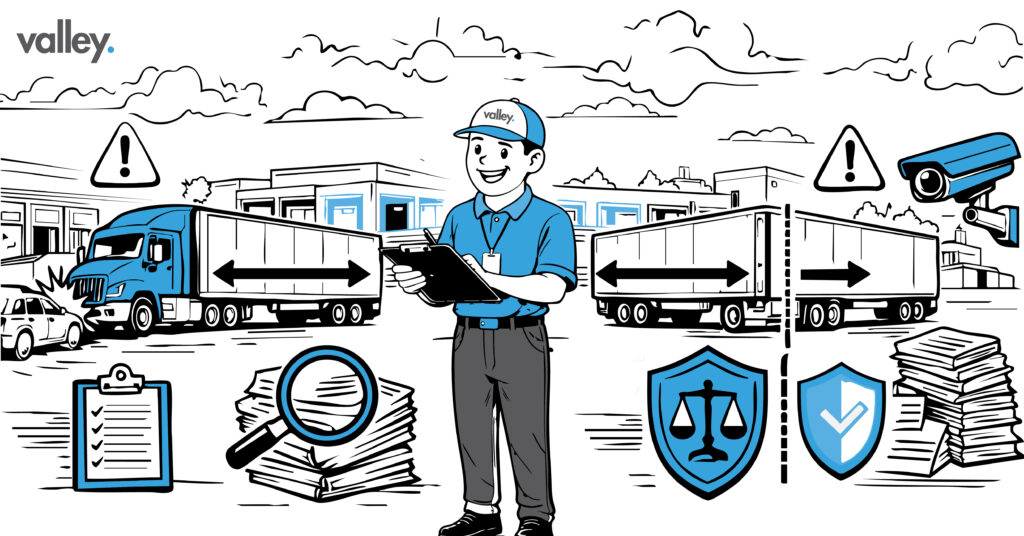
Key Takeaway: Trailer pool agreements and insurance liability are often misunderstood by fleet owners. On paper, sharing trailers between fleets, shippers, or distribution networks sounds simple. In reality, one poorly reviewed agreement can shift thousands of dollars in unexpected exposure onto your trucking operation.
Many fleets assume their existing physical damage or trailer interchange coverage automatically protects them in a trailer pool. That assumption is where problems begin.
Trailer pool agreements determine who is responsible for damage, loss, and liability involving shared trailers. If your insurance coverage does not match the agreement’s wording, your fleet may be contractually responsible for damage your policy does not cover.
Why This Issue Matters
Trailer pools are common in:
- Dedicated contract freight
- Port operations
- Large distribution networks
- Drop-and-hook operations
- Intermodal movements
As fleets scale, trailer sharing increases. The Federal Motor Carrier Safety Administration outlines financial responsibility requirements for motor carriers under federal regulations, including minimum liability standards, which fleets must verify regularly.
However, FMCSA minimums focus on public liability, not contractual trailer pool exposure. That is where fleets get caught off guard.
What Is a Trailer Pool Agreement?
A trailer pool agreement is a contract that allows multiple fleets or a shipper network to share trailers within a defined system.
Instead of each trucking company hauling only its own trailers, participants can hook to available trailers within the pool.
These agreements define:
- Who owns the trailers
- Who maintains them
- Who insures them
- Who pays for damage
- How shortages or missing trailers are handled
The legal wording matters more than most fleets realize.
Where Insurance Liability Gets Complicated
1. Trailer Interchange vs. Pool Responsibility
Trailer interchange insurance covers physical damage to a non-owned trailer while in your possession under a written interchange agreement.
But not all trailer pool agreements qualify as traditional interchange agreements. If the contract wording differs, your insurance carrier may interpret coverage differently.
Fleets should confirm whether the agreement triggers trailer interchange coverage or requires separate contractual liability review.
2. Physical Damage Coverage Limits
Some fleets carry physical damage only for owned trailers. If you are pulling pooled equipment owned by a shipper or another fleet, those trailers may not be covered under your current policy form.
If damage occurs and the agreement makes you responsible, the insurance company may deny the claim if the equipment was not scheduled or properly endorsed.
3. Contractual Liability Provisions
Many trailer pool agreements include broad indemnification clauses. That means your trucking business agrees to defend and pay for certain losses.
Insurance policies typically cover liability you assume under an “insured contract,” but not all contractual obligations qualify.
FleetOwner has reported on how indemnification clauses in transportation contracts have led to disputes between fleets and insurance companies over claim responsibility. See related coverage at FleetownerHome
The key issue is alignment between contract language and policy wording.
Common Gaps Fleets Overlook
Here is what we consistently see fleets miss when reviewing trailer pool agreements and insurance liability exposure:
- No confirmation of trailer interchange limits
- No verification of deductibles for non-owned trailers
- No review of indemnification wording
- No clarity on loss-of-use penalties
- No documentation requirement for condition reports
Each one can turn a minor yard incident into a major financial hit.
Real-World Scenario 1: Damage at a Drop Yard
A fleet hooks to a pooled trailer at a distribution center. The trailer already has minor structural damage that was not documented.
During transit, additional damage occurs. The shipper bills the fleet for full replacement cost.
Without pre-trip documentation and clear agreement terms, the fleet absorbs the entire bill.
Insurance may respond only to new damage, and only if properly covered.
Real-World Scenario 2: Missing Trailer Penalties
Some trailer pool agreements impose daily penalties for missing equipment. If a trailer is misplaced in a yard shuffle or mistakenly taken off network, the contract may assign responsibility.
Most insurance policies do not automatically cover contractual penalty fees.
FreightWaves has covered increasing equipment control disputes tied to shared trailer networks and yard management issues. You can explore related reporting at FreightwavesFreightWaves: Logistics News and Supply Chain Data
Administrative oversight becomes insurance exposure quickly.
How to Protect Your Fleet
Step 1: Review the Agreement Before Signing
Do not assume your broker or insurance company has seen the agreement unless you send it directly for review.
Ask specifically:
- Does this qualify as trailer interchange?
- Are non-owned trailers covered?
- What are the limits and deductibles?
- Does the indemnification language align with policy definitions?
Step 2: Verify Insurance Endorsements
Confirm:
- Trailer interchange limit matches replacement cost
- Deductible is manageable for your fleet
- Physical damage includes non-owned equipment when required
- Contractual liability wording aligns with the agreement
If unclear, request written confirmation from your insurance carrier.
Step 3: Improve Yard Documentation
Operational controls reduce claim disputes:
- Photo documentation at pickup and drop
- Digital inspection logs
- Condition reports signed by yard personnel
- GPS tracking for pooled trailers
Insurance responds better when documentation is clean.
The Bigger Risk: Assumed Responsibility
The most dangerous phrase in transportation contracts is “Fleet shall be responsible for…”
If your trucking operation agrees to broad responsibility without reviewing insurance alignment, you may be self-insuring large exposure.
FMCSA financial responsibility rules address public liability, but contract-based equipment exposure is a separate layer of risk. Always verify current regulatory requirements directly through FMCSA resources.
Frequently Asked Questions
Does trailer interchange automatically cover trailer pool agreements?
Not always. Coverage depends on how the agreement is structured and how your policy defines interchange.
Are penalty fees for lost trailers covered by insurance?
Typically no. Most policies cover physical damage or liability, not contractual penalty charges.
Do I need to schedule every non-owned trailer?
Usually no, but you must confirm that your trailer interchange endorsement applies to pooled equipment.
What limit should I carry for trailer interchange?
The limit should match or exceed the replacement cost of the most valuable trailer you may pull. Verify current market values.
What happens if damage existed before I hooked the trailer?
Without documentation, you may struggle to prove prior damage. Always complete inspection reports.
Does primary liability insurance cover trailer pool disputes?
Primary auto liability covers bodily injury and property damage to third parties. It does not automatically cover contractual equipment responsibility.
Trailer pool agreements can improve efficiency, but they also shift insurance exposure in ways fleets underestimate. If your contract language and policy wording are not aligned, you are gambling with your balance sheet.
Before signing your next trailer pool agreement, review your exposures, confirm coverage alignment, and make sure your limits match real replacement costs. If you are unsure where your gaps may be, request a full coverage review and make sure your fleet is protected before the next claim tests your policy.

Smarter Coverage. Real Support. No Hassle.