🔔 Announcement: American Trucking Insurance is now a part of Valley!
See details
🔔 Announcement: American Trucking Insurance is now a part of Valley!
See details

The Insurance Risk of Drop Trailers Left Overnight

Cameron Pechia / Mar 7, 2026
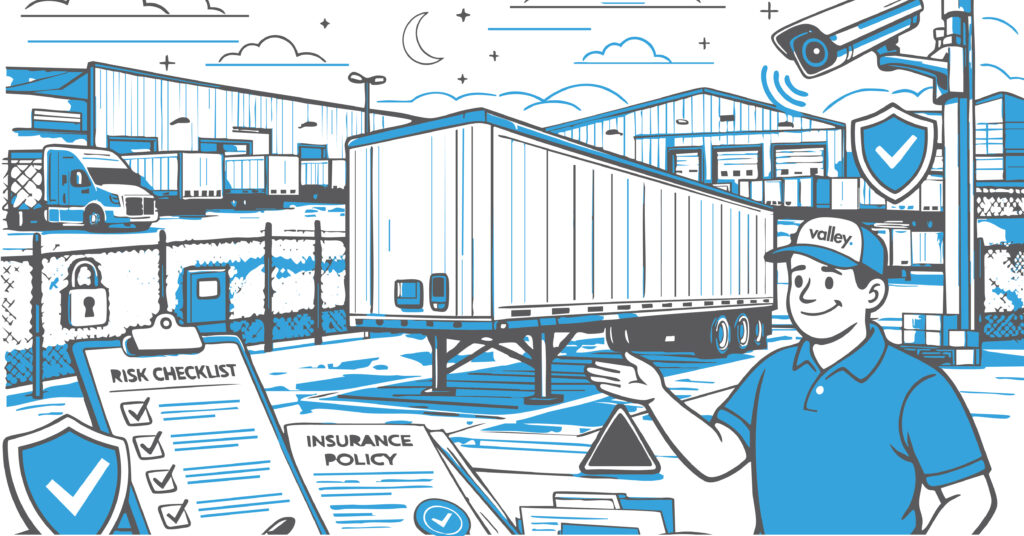
Key Takeaway: The insurance risk of drop trailers left overnight is higher than most fleets assume. When a trailer is unattended, exposure shifts across physical damage, cargo theft, liability, and contractual responsibility. This issue applies to owner operators, small fleets, and large multi state trucking operations that use drop and hook strategies to improve efficiency.
Leaving a trailer behind for convenience can quickly become a coverage dispute if the policy language does not align with how the equipment is actually used.
Drop and hook operations are common across the industry. They improve driver productivity, reduce detention time, and allow freight to move faster.
But once a trailer is disconnected and left overnight, the risk profile changes. The unit may sit in a shipper yard, a customer lot, a public truck stop, or even an unsecured location. Each setting creates different insurance implications.
According to the Federal Motor Carrier Safety Administration, motor carriers are responsible for the safe operation and control of their equipment under federal safety regulations. That responsibility does not disappear just because the tractor is gone.
If something happens overnight, the trucking company is still at the center of the claim.
Why Drop Trailers Create Unique Insurance Exposure
A connected tractor trailer unit is mobile and usually supervised by a driver. A drop trailer is stationary and often unattended.
That changes three major factors:
- Control of the equipment
- Visibility and supervision
- Theft and vandalism risk
Insurance policies are written around defined exposures. When operational behavior drifts from underwriting assumptions, gaps appear.
Overnight drops increase:
- Cargo theft probability
- Vandalism or tampering
- Fire exposure
- Hit and run damage in shared lots
- Contract disputes over who had custody
This is where the drop trailer insurance risk becomes more than theory.
Physical Damage Risk When a Trailer Sits Overnight
Physical damage coverage typically protects against collision, theft, fire, and vandalism.
However, policy language may include conditions about:
- Secure parking
- Unattended equipment
- Storage location
- Time limits
If a trailer is left in an unsecured area and stolen, the insurance carrier may examine whether reasonable protective measures were taken.
Industry reports have shown that cargo and equipment theft continues to rise in certain regions, particularly when trailers are left unattended for extended periods, as noted by Insurance Journal.
Key risk questions include:
- Was the yard fenced or monitored
- Were kingpin locks used
- Was the location approved in the policy
- Did the insured disclose regular drop operations
If underwriting assumed daily return to a secured terminal but the fleet routinely drops trailers at customer sites overnight, that mismatch can complicate claims.
Cargo Theft and Unattended Trailer Claims
Cargo coverage is even more sensitive.
Most cargo policies define when coverage begins and ends based on custody and control. When a trailer is dropped, questions arise:
- Who had legal custody at the time of loss
- Was the cargo considered delivered
- Was the trailer under a shipper agreement
- Did the bill of lading transfer responsibility
Cargo theft remains one of the most expensive risks facing fleets. Transport Topics regularly reports on organized theft rings targeting unattended trailers.
If cargo disappears overnight, coverage may depend on:
- Whether seals were intact
- Whether the trailer was locked
- Whether the policy excludes unattended vehicle losses
Even one denied claim can impact future renewals and rates.
Liability Exposure from Unsecured Equipment
Liability risk is often overlooked.
Imagine a dropped trailer rolls due to improper securement and causes property damage. Or someone is injured climbing on it in a poorly lit lot.
General liability and auto liability may both be triggered. Determining which policy responds depends on how the equipment is classified at the time of loss.
Under FMCSA safety rules, equipment must be properly secured and maintained. If negligence is alleged, plaintiffs will examine:
- Wheel chocks
- Brake condition
- Lighting
- Placement in the lot
Unattended equipment creates opportunity for third party injury claims.
Contractual Risk in Trailer Interchange Agreements
Many fleets operate under trailer interchange or drop agreements.
These contracts often shift responsibility through indemnification language. A fleet may believe the shipper assumes risk once the trailer is dropped. The contract may say otherwise.
Trailer interchange coverage is designed for situations where a trucking company pulls equipment it does not own. But drop trailer scenarios blur ownership and custody lines.
If contract language states the trucking company retains responsibility until formal acceptance, insurance may still respond even if the trailer was in another party’s yard.
Always align:
- Contract terms
- Insurance policy wording
- Actual operating procedures
If those three do not match, exposure increases.
Real-World Claim Scenarios Fleets Overlook
Scenario 1: Stolen Empty Trailer
A fleet drops an empty trailer in a retail lot overnight. The unit is stolen. The policy contains a location security condition. The claim becomes disputed because the lot was not considered secure storage.
Scenario 2: Cargo Theft After Drop
A refrigerated trailer loaded with high value goods is dropped for morning unloading. Overnight theft occurs. The insurance carrier questions whether the trailer was properly secured and whether overnight parking was disclosed.
Scenario 3: Injury in Customer Yard
A contractor trips over landing gear in a dim yard. The trucking company is sued for negligent placement. Liability defense costs exceed the value of the trailer itself.
Each of these examples shows how the insurance risk of drop trailers left overnight extends beyond simple theft.
Operational Checklist to Reduce Exposure
Fleet owners should review the following:
- Confirm physical damage coverage applies to unattended trailers.
- Review cargo policy language for unattended vehicle exclusions.
- Verify secure parking requirements.
- Use kingpin locks and wheel locks where appropriate.
- Disclose regular drop operations to your insurance carrier.
- Align trailer interchange coverage with actual contracts.
- Train drivers on approved drop locations.
- Document condition of equipment at drop and pickup.
Operational consistency reduces disputes at claim time.
Drop and hook strategies improve efficiency, but they also shift liability and theft exposure in ways many fleets underestimate. If your operation regularly leaves trailers overnight, it is time to review how your policies respond. Valley Trucking Insurance can help you evaluate physical damage, cargo, liability, and contractual exposure so your coverage matches how your fleet truly operates.
FAQs
Does insurance automatically cover a trailer left overnight?
Not automatically. Coverage depends on policy language, location security, and disclosed operations.
Is cargo still covered after I drop the trailer?
It depends on custody terms in the bill of lading and cargo policy conditions. Verify the definition of when coverage attaches and ends.
What is trailer interchange coverage?
It protects a trucking company when using equipment it does not own under a written agreement. It does not automatically fix custody disputes.
Can my rates increase after a theft claim?
Yes. Theft losses impact underwriting and renewal pricing.
Should I notify my insurance carrier about drop and hook operations?
Yes. Full disclosure ensures underwriting matches your real exposure.
Reviewed by Cameron Pechia, Agency Partner, WA Insurance License 71186
Last reviewed: 03/04/2026

Smarter Coverage. Real Support. No Hassle.