🔔 Announcement: American Trucking Insurance is now a part of Valley!
See details
🔔 Announcement: American Trucking Insurance is now a part of Valley!
See details

Subhauling Insurance Gaps: What Trucking Operations Miss Before It’s Too Late

Cameron Pechia / Jun 10, 2026
Reviewed by Cameron Pechia, Founder, WA Insurance License 71186
Last reviewed: 5/10/2026
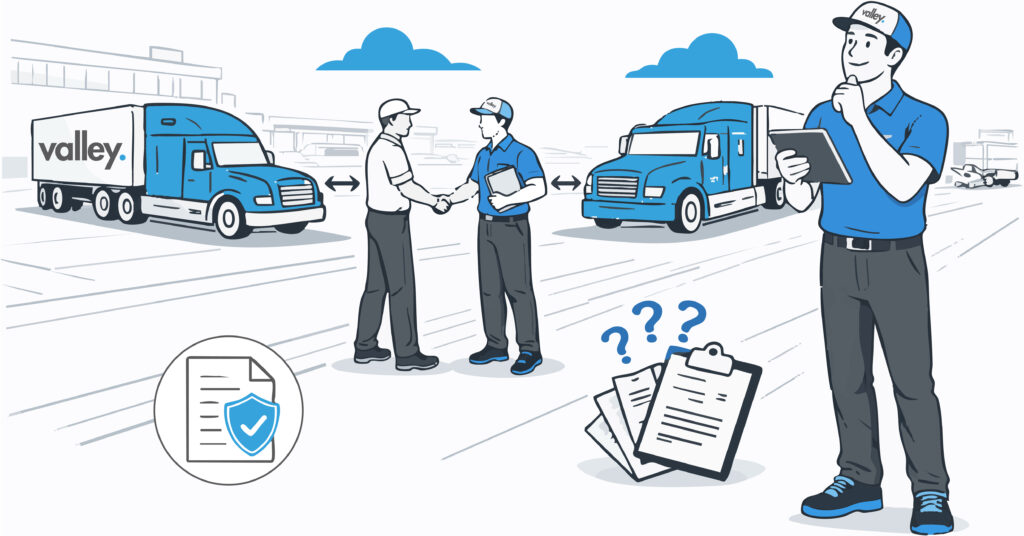
Key takeaway: Subhauling insurance gaps occur when a fleet owner or trucking operation outsources a load to another trucking business — and neither party has coverage that clearly applies to the cargo, the equipment, or the liability exposure during that move. The primary fleet’s policy often excludes loads moved by equipment they don’t own or operate. The subhauling trucking operation’s policy may not extend to loads dispatched by someone else’s authority. The gap sits between them. It applies to any fleet that regularly or occasionally subhauls loads to cover capacity, manage overflow, or fill lanes they can’t run themselves.
You got a call. Load needs to move, your trucks are committed. You’ve got a relationship with another operation — they run good equipment, their driver is solid. You subhaul it to them. Load moves, customer’s happy, done.
Until it’s not.
A claim hits — damaged freight, an accident, a lost load. And now everyone finds out that coverage wasn’t as clear as anyone assumed. The primary fleet thought the subhauling operation’s policy covered it. The subhauling operation’s carrier says the load was dispatched under someone else’s authority. Suddenly there’s a six-figure claim and two policies pointing at each other.
That’s the subhauling insurance gap. It’s not hypothetical. It happens regularly, and it happens to operations that thought they had this covered.
What Is Subhauling and Why Does It Create Insurance Problems?
Subhauling is when a trucking operation with a customer commitment contracts out that load — or a portion of it — to another trucking business to physically move the freight. The primary fleet keeps the customer relationship and the revenue. The subhauling operation provides the equipment and driver.
The insurance problem starts with how policies are written. A standard trucking policy is built around the named insured — their trucks, their drivers, their authority. When you hand a load off to another operation, that load is now moving on equipment you don’t own, driven by someone who isn’t on your policy, under an authority relationship that may or may not be documented in writing. Your policy wasn’t designed to cover that. The subhauling operation’s policy was designed to cover their operations — not necessarily loads that originated under your authority and your shipper contract. The result is a coverage gap that neither policy was written to fill. And gaps only become visible when there’s a claim to settle.
Who’s Legally on the Hook When a Subhauled Load Has a Claim?
This depends on who holds the bill of lading, who the shipper contracted with, and what the written agreement between the two trucking operations actually says — if one exists at all.
The Hired Trucking Operation’s Liability Exposure
The trucking operation physically moving the freight has direct exposure the moment that load is on their truck. If there’s an accident, their auto liability policy responds first for third-party bodily injury and property damage. For cargo damage, their motor truck cargo policy applies — but only if it covers loads dispatched by another operation’s authority. Not all cargo policies are written that way. Some are written to cover only loads the insured dispatched themselves, which means a subhauled load could fall outside coverage entirely depending on the policy language. Before subhauling loads for another operation, the trucking business doing the hauling needs to confirm their cargo policy doesn’t have an “own authority only” restriction baked in.
The Primary Fleet’s Exposure as the Contracting Party
The fleet that originally accepted the load from the shipper retains legal exposure under the Carmack Amendment regardless of who physically moved the freight. That federal statute governs liability for loss or damage to interstate shipments, and it attaches to the party that entered the transportation contract — meaning you. If the shipper files a cargo claim, they file it against the contracting party: you. Your ability to recover from the subhauling operation depends entirely on what your written agreement says and whether their coverage actually applies to the loss.
Where Your Standard Trucking Policy Falls Short
Two coverage lines create the most friction in subhauling arrangements: cargo and auto liability. Both have common policy language that doesn’t hold up the way fleet owners expect.
Cargo Coverage and the Subhauled Load Problem
Motor truck cargo policies cover freight in the named insured’s care, custody, and control. When you subhaul a load to another operation, physical care, custody, and control of that freight transfers to them. Your cargo policy almost certainly does not cover freight that left your physical possession and was placed in someone else’s truck. What most fleet owners don’t realize is that the gap isn’t always about the dollar amount — it’s about which policy responds at all. If the subhauling operation’s cargo policy has authority restrictions, and your policy doesn’t cover their custody, the freight moved without any active cargo coverage from either party. That’s not a coverage shortfall. That’s a complete absence of coverage.
Auto Liability When You Don’t Own the Truck
Your auto liability policy covers your described vehicles and, depending on how it’s written, hired and non-owned auto. But “hired auto” typically means vehicles you’re renting or leasing with temporary control — not vehicles dispatched under a separate operation’s authority to move your loads. If a truck operated by the subhauling company causes an accident while hauling your load, the primary liability response comes from their policy. Your exposure as the contracting party is more indirect — but shippers and plaintiffs’ attorneys don’t always see it that way. If your name is on the bill of lading and the shipper contract, you may get named in litigation regardless of whose truck caused the accident.
The Written Contract Question Nobody Asks Until There’s a Claim
Most subhauling arrangements are built on relationships, not paperwork. A call gets made, the load gets confirmed, and the truck rolls. That works fine until it doesn’t.
Under 49 CFR Part 376, which governs the lease and interchange of vehicles and the use of equipment by authorized trucking operations, there are specific requirements for written lease agreements when one operation uses another’s equipment or moves freight under leased authority. The regulations specify that the lease must identify who carries insurance and for which exposures — including whether the contracting operation or the equipment owner is responsible for cargo coverage during the haul.
Without a written agreement that addresses insurance responsibility, both parties are operating on assumptions. Assumptions don’t pay claims. A proper subhauling or trip-lease agreement should specify: which party carries primary auto liability, which party’s cargo policy covers the freight, what happens if a claim exceeds one policy’s limits, and how recoveries are handled between the two operations. This isn’t paperwork for paperwork’s sake — it’s the only thing that tells the claims adjusters which policy responds first.
Owner-Operators Who Subhaul for Larger Fleets: Your Gaps Are Different
If you’re an owner-operator picking up loads dispatched by a larger fleet, your insurance picture has its own version of this problem. When you’re running under a fleet’s operating authority on a trip lease or subhauling arrangement, the fleet’s auto liability coverage typically covers the public liability exposure for that move. Their MCS-90 endorsement follows the authority, not the truck.
But here’s what that doesn’t cover: your truck itself if it’s damaged. Your physical damage coverage is always your responsibility — the fleet’s policy doesn’t pay to repair or replace your equipment. And if the fleet’s cargo coverage doesn’t extend to subhauled loads, or if a claim dispute leads to recovery proceedings between the two parties, your exposure as the operator can be significant even if you weren’t at fault for the loss. Bobtail coverage and non-trucking liability coverage also become relevant here — specifically for the time you’re operating off their dispatch but still on the road. Verify with your own broker that your policy covers off-dispatch operation when running loads for another operation.
FMCSA’s insurance filing requirements under 49 CFR Part 387 establish the minimum financial responsibility required for operating authority — but meeting the minimum doesn’t mean every arrangement is covered. The minimums are a compliance floor, not a coverage guarantee.
What Coverage Should Actually Be in Place for Subhauling Arrangements
There’s no single off-the-shelf policy that solves subhauling gaps. What’s needed is a review of existing coverage against the specific structure of your arrangements. That said, here’s what the coverage picture should include:
For the primary fleet contracting out loads:
- Contingent cargo coverage to respond if the subhauling operation’s cargo policy doesn’t apply or is exhausted
- A written trip lease or subhauling agreement that clearly assigns insurance responsibility
- Verification of the subhauling operation’s certificate of insurance before every arrangement — not once at the start of the relationship, every arrangement
- Confirmation that their cargo policy doesn’t have own-authority restrictions that would void coverage on your load
For the trucking operation doing the subhauling:
- Cargo policy reviewed for any restriction on loads dispatched by another operation’s authority
- Physical damage coverage for their own equipment — this is never covered by the contracting fleet’s policy
- Bobtail/non-trucking liability confirmed for off-dispatch time
- Clarity on whether their auto liability policy follows the driver or the truck when operating under another fleet’s authority
Neither operation should assume the other’s policy fills the gap. That assumption is exactly how six-figure claims end up uninsured.
If your operation subhauls loads regularly — even occasionally — and you haven’t had your policy language reviewed against the specific structure of those arrangements, now is the right time. The coverage review at Valley Trucking Insurance costs you nothing and takes less time than one uncovered claim. Start at Valley Trucking Insurance.
Frequently Asked Questions
Does my trucking policy cover loads I subhaul to another operation?
Almost certainly not in full. Your cargo policy covers freight in your care, custody, and control. Once you hand a load off to another trucking business, their physical possession breaks your policy’s coverage trigger. You may retain Carmack Amendment liability to the shipper, but your own cargo policy likely won’t respond to a loss that happened in someone else’s truck.
What is the Carmack Amendment and how does it apply to subhauling?
The Carmack Amendment (49 U.S.C. § 14706) governs carrier liability for loss or damage to interstate shipments. It attaches to the party that entered the transportation contract with the shipper — meaning if you accepted the load and subhauled it, you remain liable to the shipper for cargo loss even though you didn’t physically move the freight. Your ability to recover from the subhauling operation depends on your written agreement with them.
Is a written contract required when subhauling loads?
Federal regulations under 49 CFR Part 376 require written lease agreements when one trucking operation uses another’s equipment or authority. Even outside the regulatory requirement, a written agreement assigning insurance responsibility is the only way to establish which policy responds when a claim occurs. Verbal arrangements don’t hold up in claims disputes.
What is contingent cargo coverage and do I need it for subhauling?
Contingent cargo coverage responds when the primary cargo policy — in this case, the subhauling operation’s policy — fails to respond, is disputed, or is insufficient. It’s specifically designed for situations where you retain liability exposure for freight you didn’t physically move. If your operation regularly subhauls loads, contingent cargo is worth reviewing with your broker.
Does the subhauling trucking operation’s auto liability cover accidents on my load?
Generally yes for direct third-party liability — their policy responds first for accidents involving their truck. But if their policy has any restrictions on loads moved under another operation’s dispatch or authority, coverage could be disputed. Always verify their certificate of insurance and confirm the policy doesn’t have exclusions for subhauled loads.
What coverage does an owner-operator need when subhauling for a larger fleet?
Physical damage is always the owner-operator’s responsibility — the fleet’s policy doesn’t cover your truck. Bobtail and non-trucking liability coverage matters for off-dispatch time. Confirm with your broker that your cargo exposure is addressed if the fleet’s policy has restrictions on subhauled loads. And get the arrangement in writing.
What is the MCS-90 endorsement and does it help with subhauling gaps?
The MCS-90 is a mandatory endorsement on auto liability policies for motor carriers with FMCSA operating authority. It ensures public liability coverage follows the authority even if the policy would otherwise exclude a claim. It’s a public protection mechanism — it doesn’t resolve cargo coverage gaps or the allocation of liability between contracting parties in a subhauling arrangement.
How often should I verify a subhauling operation’s insurance before using them?
Every time. A certificate of insurance on file from six months ago tells you nothing about their current policy status. Policies lapse. Coverage limits change. If you’re relying on their certificate from a prior arrangement, you’re operating on stale information. Request a current certificate before every load moves.

Smarter Coverage. Real Support. No Hassle.