🔔 Announcement: American Trucking Insurance is now a part of Valley!
See details
🔔 Announcement: American Trucking Insurance is now a part of Valley!
See details

What Happens When You Run Without Trucking Insurance

Cameron Pechia / Dec 11, 2025
Reviewed by Cameron Pechia, Founder, WA Insurance License 71186
Last reviewed: 3/18/2026
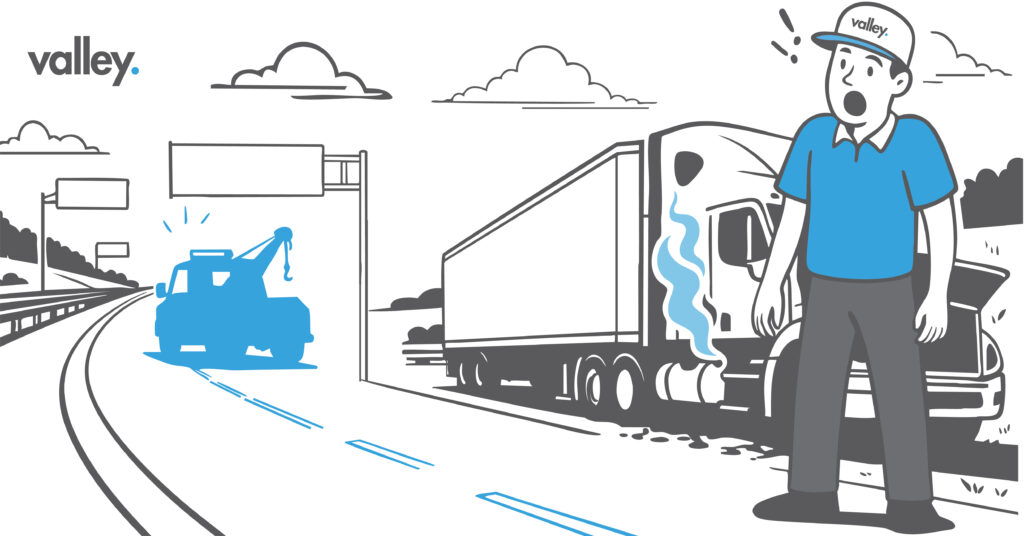
Running a trucking business without insurance is one of the fastest ways to lose your authority, your truck, and your financial stability. Many new carriers underestimate the consequences or think they can operate for a few weeks while they “figure things out.” The reality is completely unique. Operating without proper insurance exposes a driver or fleet to legal penalties, financial losses, and long-term damage that can take years to repair.
This guide explains what really happens when a truck runs without insurance. It covers legal risks, FMCSA requirements, financial penalties, roadside enforcement, claim consequences, and how running uninsured affects future rates. For anyone working in logistics or planning to launch a trucking company, these risks are not optional to understand. They are the difference between staying in business and shutting the doors.
Quick Answer
Running a truck without insurance leads to immediate out-of-service orders, heavy fines, impoundment, loss of authority, and personal financial liability for any accident. The FMCSA requires active insurance for a carrier to operate, and running a load while uninsured can trigger penalties from both state and federal authorities. Future insurance becomes pricier because insurers view uninsured operation as high risk.
Why Insurance Is Non-Negotiable
Insurance is not just a formality. It is a legal requirement for every truck that operates under its DOT number. The FMCSA lists minimum liability levels that must be active for a carrier to move freight. If coverage lapses, the authority is marked inactive, and operating with inactive authority is treated as a serious violation.
The FMCSA publicly explains the minimum liability requirements here: FMCSA Minimum Insurance Requirements
Even a short lapse can trigger a chain reaction of penalties.
What Happens the Moment Insurance Lapses
Insurance cancellations are reported directly to the FMCSA by the insurer. Carriers do not get to hide a lapse or delay reporting. Once coverage is gone, the FMCSA updates the authority status automatically.
Authority Is Suspended
Your operating authority becomes inactive. This means you are legally prohibited from hauling freight.
You Cannot Book Loads
Brokers verify their authority status. If it shows “not authorized,” no load board or broker will assign freight.
You Risk Roadside Shutdown
If you are stopped at a weigh station or during a roadside inspection, inspectors can issue an out-of-service order immediately.
Drivers Lose Income
If you are a one-truck operation, every hour of suspension means lost revenue. If you are a fleet, trucks sit idle and drivers move on.
Insurance Reinstatement Is Not Instant
Many new carriers assume they can “just add insurance again.” Insurance reinstatement requires updated filings. Insurers must send forms to the FMCSA, which takes time to process.
During this time, you still cannot run loads.
Legal Penalties for Operating Without Insurance
Operating a commercial truck without active insurance is illegal in every state. Penalties depend on the location, but they generally include:
Out-of-Service Orders
Inspectors can stop the truck on the spot.
Fines That Add Up Fast
State penalties may include hundreds or thousands of dollars in fines. The exact amounts vary, but most states treat uninsured operation as a serious offense.
Impoundment of Equipment
Some states allow authorities to impound the truck until proof of insurance is provided.
Temporary or Permanent Loss of Authority
Repeated violations destroy a carrier’s ability to maintain DOT authority.
A 2024 safety bulletin by the Insurance Information Institute reported that operating without coverage exposes carriers to severe financial risk during accidents: Ollis/Akers/Arney
The Financial Risk Is Even Higher
Legal penalties are only the beginning. The financial consequences can shut down your business.
One Accident Can Bankrupt a Carrier
If you are uninsured and cause a crash:
- You are personally responsible for all damage
- You must pay for injuries, fatalities, cargo damage, and property loss
- You can face lawsuits
- Your truck may be seized or sold to satisfy judgments
Accident costs in trucking can reach hundreds of thousands or even millions of dollars.
Cargo Claims Become Personal Responsibility
If you damage or lose the load, the customer or broker can pursue the carrier directly. Without insurance, you pay out of pocket.
Towing and Storage Fees Increase Rapidly
If your uninsured truck is impounded after a crash or roadside stop, storage fees can reach thousands of dollars.
You May Owe Brokers and Shippers
If you accept a load while uninsured and cannot complete it, the shipper may pursue breach of contract or claim charges.
How This Affects Future Insurance
Running without insurance damages your reputation with insurers. When underwriters review risk, they check:
- FMCSA history
- Roadside inspection data
- Safety scores
- Any gaps in coverage
- Lapses or cancellations
- Legal violations
A carrier that has operated uninsured is flagged immediately. This often leads to:
Higher Premiums
Insurers charge more because uninsured operation suggests poor compliance.
Fewer Carrier Options
Some insurers decline carriers with gaps in coverage.
Stricter Terms
Large down payments, strict underwriting reviews, and limited policy options become common.
Delays in Activation
New insurers may take longer to approve coverage, delaying your return to work.
A report from the National Association of Insurance Commissioners shows how insurers factor risk and claims history into pricing: NAIC Consumer Insurance Insights
The DOT Record Stays With You
The FMCSA keeps a public record of:
- Authority lapses
- Out-of-service orders
- Violations
- Crashes
- Insurance filings
Anyone can see this record. Brokers check these details. Insurers check them. Even shippers look at safety scores and authority history before working with a carrier.
Running uninsured becomes part of your business reputation.
Real-World Scenarios of What Happens
These examples show the real consequences for carriers who tried to operate without insurance.
Scenario 1: The One-Truck Owner Who Tried to “Run One Week without Insurance”
A new owner-operator delayed his insurance payment. He planned to renew it after one week. That week, he was stopped at a weigh station. The officer saw inactive authority and issued an out-of-service order. He lost a full week of income and paid fines before he could return to work.
Scenario 2: Carrier With Lapsed Insurance Involved in a Minor Crash
A small fleet had a coverage lapse for two days due to a filing error. One of their trucks was hit in a parking lot. Since they had no active insurance, they had to pay for the damage themselves. Their insurer refused to backdate coverage.
Scenario 3: The Uninsured Cargo Loss
A dispatcher booked a high-value load for a truck that had inactive authority. The truck broke down. The shipper filed a claim, learned the truck had no coverage, and took legal action against the carrier directly. The financial impact shut down the business.
What Carriers Should Do Instead
Running without insurance is never worth the risk. The better strategy is to build a stable, predictable system that prevents lapses.
Pay premiums on time
Set reminders and automate payments if possible.
Use a broker you trust
A knowledgeable insurance broker tracks renewals and FMCSA filings for you.
Review policies yearly
Rates change, coverage needs shift, and business growth affects policies.
Build small reserves
Having even a small emergency fund prevents lapses during slow revenue periods.
Update your insurer on business changes
New trucks, new drivers, or new lanes must be added to your policy to stay compliant.
How to Get Back Into Compliance if a Lapse Happens
If your coverage lapses, react fast.
- Contact your insurer immediately
- Request reinstatement if possible
- Confirm FMCSA filings
- Do not run loads until status is active
- Update brokers once authority is restored
Never rush back onto the road without confirming filings are posted.
Final Thoughts
Running a truck without insurance is one of the riskiest decisions a carrier can make. It creates legal trouble, financial exposure, higher premiums, and lasting damage to your business reputation. Even a short lapse can take weeks to fix and cost thousands of dollars in lost revenue.
The safest move is simple. Stay insured, stay compliant, and treat insurance as a core part of your business. With the right planning and discipline, you protect your drivers, your equipment, and your financial future.
Review your insurance status today. Confirm your FMCSA filings are active, check your renewal dates, and talk to your insurance advisor about ways to stabilize your coverage. Staying covered is not just a legal requirement. It is one of the strongest protections your business has.
If you want a clear insurance review for your business, you can request a quote here
FAQs
Can I haul loads with inactive authority if insurance will start next week?
No. It is illegal to operate without active insurance and authority.
Can insurance be backdated?
No. Insurers cannot legally backdate policies to cover a lapse.
What happens if I crash while uninsured?
You become financially responsible for all damages and liabilities.
Will brokers see if my authority is inactive?
Yes. Authority status is public and updated daily.
Can a lapse make my premium go up?
Yes. Insurers increase rates for lapses and compliance issues.

Smarter Coverage. Real Support. No Hassle.