🔔 Announcement: American Trucking Insurance is now a part of Valley!
See details
🔔 Announcement: American Trucking Insurance is now a part of Valley!
See details

Does Your Insurance Cover Rental Trailers? What Fleet Owners Need to Know

Cameron Pechia / Jun 10, 2026
Reviewed by Cameron Pechia, Founder, WA Insurance License 71186
Last reviewed: 5/13/2026
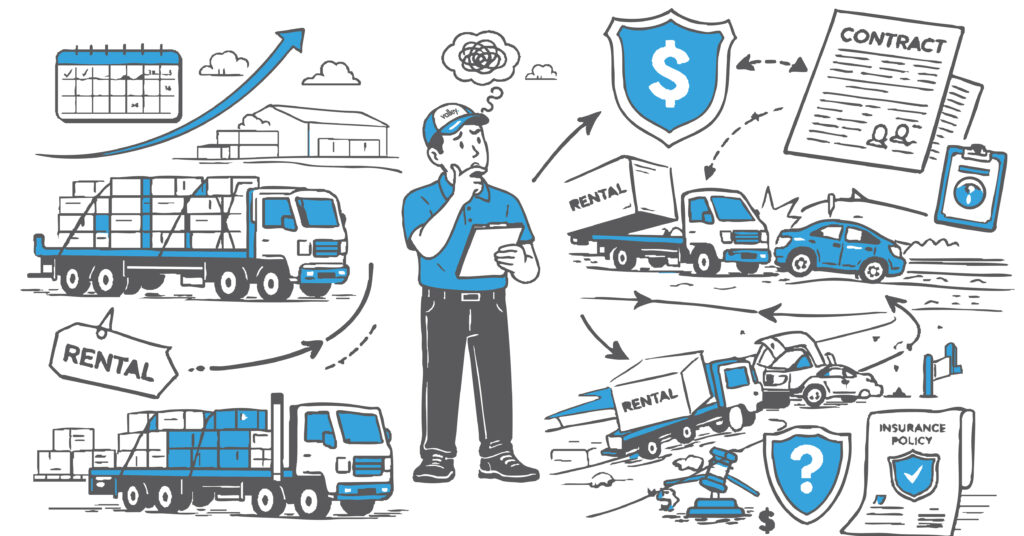
Key takeaway: Rental trailer insurance coverage in trucking refers to the combination of physical damage, non-owned trailer, and cargo coverages that protect a fleet when operating a trailer it doesn’t own. Most standard trucking policies do not automatically extend to rented or leased trailers. Coverage depends on the type of rental arrangement, whether a signed interchange agreement exists, and what endorsements are currently on your policy. Fleet owners using rental trailers during peak season without verifying coverage first are exposed to out-of-pocket repair costs, cargo liability gaps, and potential contract compliance failures.
Peak season is the time most fleet owners stretch capacity. You’ve got more loads than trucks. Your drivers are picking up trailers from equipment rental companies, other fleets, and drop yards they’ve never been to before. You get the call, the trailer gets hooked up, and the truck rolls.
Here’s the problem nobody addresses until something goes wrong: that rented trailer probably isn’t covered by your policy. Not the physical damage. Not the cargo on board if the trailer causes a problem. And if there’s no written interchange agreement in place, even the coverage you think applies may not respond.
This isn’t a fringe scenario. It happens to mid-sized fleets every peak season. And the fix is straightforward, once you know what to look for.
What Is Rental Trailer Insurance Coverage in Trucking?
Rental trailer insurance coverage is not a single policy. It’s a coverage stack that may include non-owned trailer physical damage, trailer interchange insurance, and cargo liability, depending on how the trailer was obtained and what’s in the rental agreement.
When a fleet rents a trailer, it takes on legal responsibility for that equipment. If the trailer is damaged in a collision, stolen, or catches fire while in your possession, the repair or replacement cost falls to you, not the rental company, unless your policy responds. Standard commercial trucking policies cover the trailers you own. They are not designed to automatically extend to trailers in your temporary care.
The federal framework that governs trailer leasing in trucking, 49 CFR Part 376, requires a written lease when an authorized trucking company (motor carrier) operates equipment it doesn’t own. That regulation establishes who bears responsibility for the equipment and who must carry insurance during the lease period. Understanding that regulatory baseline is step one for any fleet adding rental trailers to the mix.
Why Your Existing Policy Probably Doesn’t Cover a Rental Trailer
Physical Damage Coverage Follows the Equipment You Own
Physical damage coverage on a commercial trucking policy is scheduled coverage. That means it covers specific trailers listed on the policy. When you add a new trailer to your fleet, you add it to the schedule. When you rent a trailer, it’s not on that schedule.
That matters because if one of your drivers rear-ends another vehicle and damages the rental trailer in the process, your physical damage policy won’t pay for the trailer repairs. The rental company will come back to you for the cost. If that’s a newer 53-foot refrigerated trailer, you could be looking at a significant out-of-pocket expense.
Some fleet owners assume their liability coverage picks this up. It doesn’t. Liability covers damage you cause to third parties. It doesn’t cover damage to equipment in your possession.
Non-Owned Trailer Coverage Has a Critical Condition
Non-owned trailer coverage is the endorsement most brokers point to when this question comes up. It covers physical damage to a trailer you don’t own while it’s attached to your power unit. That last part is the catch.
If your driver drops the trailer at a receiver, unattaches from it, and the trailer is damaged while sitting in the yard, non-owned trailer coverage does not apply. It also generally does not apply if there is a signed interchange agreement in place. In that scenario, insurers expect you to carry trailer interchange coverage instead. Carrying the wrong coverage type for the arrangement you’re actually operating under is one of the most common gaps I see fleets discover too late.
Trailer Interchange vs. Non-Owned Trailer: Which One Do You Need?
These two coverages are regularly confused, and the distinction is operationally specific. Trailer interchange coverage protects a non-owned trailer whether it’s attached or detached, loaded or parked, as long as there is a signed trailer interchange agreement (TIA) governing the arrangement. Non-owned trailer coverage applies only while the trailer is attached to your power unit and typically requires no formal agreement.
If you are renting from an equipment company that issues a written rental or interchange agreement, the insurer will expect trailer interchange coverage to be in force, not a non-owned endorsement. Many rental companies, especially those operating under the Uniform Intermodal Interchange and Facilities Access Agreement (UIIA), specify minimum trailer interchange limits in their contracts before they release equipment. Operating without the right coverage type can result in a denied claim even if you carry coverage in the right dollar amount.
The practical rule: if there’s a signed contract for the trailer, you need trailer interchange coverage. If a driver is borrowing a trailer informally and there’s no written agreement, non-owned trailer coverage may be the applicable layer. When in doubt, get both conversations in front of your agent before the season starts.
What the Lease Agreement Actually Requires You to Carry
Under 49 CFR § 376.12, a written trailer lease must clearly specify who is responsible for insurance coverage during the lease period. The rental company’s agreement will state what coverage you are required to maintain, including minimum limits and deductible thresholds.
Most fleet owners don’t read those agreements carefully. They sign at the yard, hook up, and move the load. Then they find out after a loss that they were required to carry $50,000 in trailer interchange coverage with a maximum $2,500 deductible, and their policy had a $10,000 deductible or no interchange coverage at all.
Read every rental agreement before the season starts. Specifically look for:
- The required minimum coverage type (trailer interchange, non-owned, or both)
- The required coverage limit per trailer
- Maximum allowable deductible
- Whether you need to name the rental company as an additional insured on your policy
- Any cargo or cargo-related liability requirements specific to the trailer type
If the rental company requires additional insured status, your agent needs to issue an updated certificate of insurance before the equipment leaves the yard. This is not optional. Many rental yards will not release equipment without it.
The Peak Season Risk Nobody Talks About: Cargo Coverage on a Rental
Physical damage coverage on the rental trailer is the obvious gap. The less obvious one is cargo coverage when something goes wrong with the load inside a rental trailer.
Most motor truck cargo policies do not exclude cargo just because it’s in a non-owned trailer. But if a cargo claim is disputed and the rental trailer had a pre-existing mechanical defect, latent refrigeration failure, or a door seal issue that wasn’t documented at pickup, you can end up in a fight with the rental company over what caused the loss. The shipper is still coming after you. That claim resolution gets complicated fast when the trailer’s maintenance history isn’t yours to document.
The fix is simple and almost never done: a detailed pre-trip inspection with written documentation of trailer condition at the time of pickup. Photographs. Notes on any pre-existing damage, door seals, reefer unit temps if applicable, landing gear function. Keep that documentation on file. If a cargo claim hits on that load, you have a clear baseline for what was yours to own and what wasn’t. Cargo coverage under the Carmack Amendment framework, 49 U.S.C. § 14706, places liability on the trucking company (motor carrier) for cargo loss or damage in transit. That liability doesn’t disappear because the trailer was rented.
How to Add Rental Trailer Coverage Before the Next Load Moves
What to Bring to Your Agent
Before calling your agent, pull together the following:
- A copy of the rental company’s standard lease or interchange agreement
- The required minimum limits stated in that agreement
- How many rental trailers you expect to use at any one time
- The type of trailers you’ll be renting (dry van, reefer, flatbed, container chassis)
- Your current physical damage deductible schedule for reference
Reefer trailers carry higher replacement values than dry vans, and some insurers treat them as a separate class. If you’re renting refrigerated equipment for a food or beverage account during peak season, your agent needs to know that specifically.
Temporary Endorsements vs. Policy Updates
If your peak season rental use is limited to a 6-to-8-week window, a temporary trailer interchange endorsement may be more cost-effective than a full policy update. Some insurers will write a short-term endorsement for a defined period with a set per-unit limit.
If rental trailers are becoming a recurring part of your operation, adding trailer interchange coverage as a standing policy feature is the cleaner move. It eliminates the scramble at the start of every peak season, and it means your drivers are never pulling a trailer that’s outside your coverage on a technicality.
Either way, get the endorsement in place and the certificate of insurance issued before the trailer hooks up. Not after. A claim that occurs before the paperwork is processed is not covered.
If you’re heading into peak season with rental trailers in the mix and you’re not sure whether your current policy covers them, the time to find out is before a driver goes out, not after a claim comes in. Head to Valley Trucking Insurance to review your current coverage and get a quote built around how your operation actually runs.
Frequently Asked Questions: Rental Trailer Insurance Coverage for Trucking Fleets
Does my commercial trucking policy automatically cover a rental trailer?
No. Standard commercial trucking policies cover scheduled equipment — trailers you own and have listed on the policy. A rental trailer is not on your schedule. You need a non-owned trailer endorsement or trailer interchange coverage, depending on your rental arrangement.
What’s the difference between non-owned trailer coverage and trailer interchange coverage?
Non-owned trailer coverage applies only when the trailer is attached to your power unit. Trailer interchange coverage applies whether the trailer is attached or detached, as long as there is a signed interchange agreement. If the rental company gives you a written contract, you generally need trailer interchange, not non-owned coverage.
Does the FMCSA require trailer interchange insurance?
The FMCSA does not specifically mandate trailer interchange insurance under federal minimums. However, most rental and interchange agreements contractually require it. Operating without it can result in denied gate access, load rejections, or an uncovered claim.
What does 49 CFR Part 376 require when I rent a trailer?
49 CFR Part 376 requires a written lease when a trucking company (motor carrier) operates equipment it doesn’t own. That lease must specify who is responsible for insurance during the rental period. It’s the foundation of every trailer rental arrangement, and the insurance requirements in your specific rental agreement flow from it.
What happens if a rental trailer is damaged while detached at a receiver?
If the trailer is detached and damaged and you only carry non-owned trailer coverage, the claim likely won’t be covered. Non-owned trailer coverage applies while the trailer is attached. Trailer interchange coverage would apply in this scenario if a valid interchange agreement is in place.
Do I need to list the rental company as an additional insured on my policy?
Many rental agreements require it. You’ll need your agent to issue a certificate of insurance naming the rental company as an additional insured before equipment is released. Showing up at the yard without that certificate can result in the trailer not being released.
Does my cargo coverage still apply in a rented trailer?
Generally yes, but document the trailer’s condition at pickup. If a cargo claim arises and there’s a dispute over whether a trailer defect caused the loss, you want a written and photographed baseline of the trailer’s condition at the time you took possession.
How far in advance should I set up rental trailer coverage before peak season?
Give your agent at least two to three weeks before your first expected rental. That allows time to review your rental agreements, adjust limits, issue updated certificates, and resolve any underwriting questions. Waiting until the season starts means gaps.

Smarter Coverage. Real Support. No Hassle.