🔔 Announcement: American Trucking Insurance is now a part of Valley!
See details
🔔 Announcement: American Trucking Insurance is now a part of Valley!
See details

Reefer Breakdown Claims: What Your Insurance Actually Covers (And What It Doesn’t)

Cameron Pechia / Apr 17, 2026
Reviewed by Cameron Pechia, Founder, WA Insurance License 71186
Last reviewed: 4/17/2026
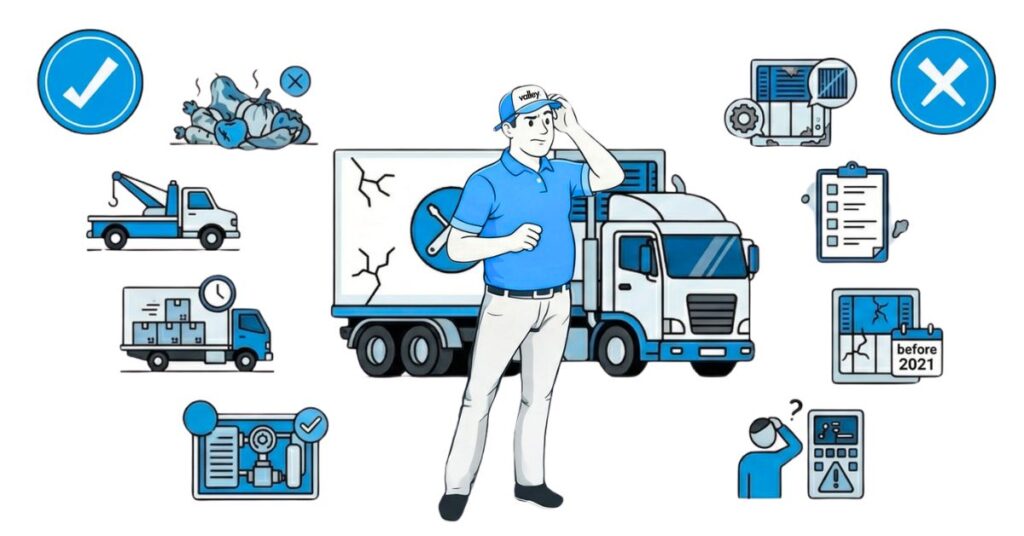
Key takeaway: Reefer breakdown coverage is an endorsement added to a motor truck cargo policy that pays for cargo spoilage caused by the mechanical or electrical failure of a refrigeration unit. Standard cargo insurance does not cover temperature-related losses on its own — the endorsement is required. It applies to fleets and owner-operators hauling perishable freight: produce, frozen foods, pharmaceuticals, dairy, and similar temperature-sensitive cargo. Coverage pays for the cargo. It does not pay to repair or replace the reefer unit. Claims can be denied if maintenance records are incomplete, if the failure was caused by driver error, or if the unit had a pre-existing condition the insurer considers foreseeable. Know what you have before you need it.
Your reefer alarm goes off at 2 a.m. somewhere in Nebraska. The unit has been down long enough that the temperature in the trailer has climbed well outside the specified range. You’ve got a full load of produce, a broker contract that required reefer breakdown coverage, and a cargo value that could run $40,000 or more.
Whether your insurance pays that claim is not determined at 2 a.m. It’s determined by what your policy actually says, what your maintenance logs show, and whether the endorsement you were told you had is written the way you think it is.
Here’s what actually happens when you file a reefer breakdown claim, and where most of them run into problems.
What Is Reefer Breakdown Coverage, and Why Isn’t It Automatic?
Reefer breakdown coverage is an endorsement — a written addition to your motor truck cargo policy that extends coverage to losses caused specifically by refrigeration unit failure. Without it, your cargo policy covers the usual named perils: fire, theft, collision damage, loading and unloading incidents. Temperature-related loss from a mechanical failure? That’s typically excluded unless the endorsement is in place.
The coverage applies when a refrigeration unit fails due to a mechanical or electrical cause — compressor failure, electrical shorts, control system malfunction — and that failure causes cargo to spoil. The failure has to be sudden and accidental. It cannot be a slow deterioration that went unaddressed or a unit that was already throwing codes before the trip started. Insurers write this distinction carefully, and adjusters look for it closely when a claim comes in.
This is not a federal requirement. FMCSA does not mandate reefer breakdown coverage. But shippers and freight brokers often require it contractually before they’ll assign a refrigerated load, and that practical requirement makes it nearly unavoidable if reefer freight is part of your operation.
What a Motor Truck Cargo Policy Covers Without the Endorsement
A standard motor truck cargo policy covers physical loss or damage to freight in your care, custody, and control — from the named causes of loss written into the policy. That list typically includes collision, fire, theft, and in some forms, overturn. It does not automatically extend to losses caused by equipment malfunction.
This is the gap most fleet owners don’t think about until they’re in it. The cargo in the trailer is covered. The mechanism keeping it cold is not. If a load spoils because the reefer failed, that’s not a collision. It’s not theft. It’s not fire. Under a standard cargo form, without the endorsement, you’re holding the full value of that load yourself.
The endorsement exists to close that gap. But it only closes it within specific parameters — and the parameters matter when the claim is being evaluated.
What Reefer Breakdown Coverage Actually Pays For
Cargo Spoilage from Mechanical or Electrical Failure
The core coverage is straightforward: if the refrigeration unit fails due to a mechanical or electrical cause, and that failure results in cargo loss or spoilage, the endorsement pays the value of the cargo up to your policy limit. The failure must be sudden, accidental, and documented. Compressor failure, electrical shorts, thermostat and sensor malfunction, fuel line failures — these are the covered causes. The key phrase in most policies is “sudden and accidental.” That language is there specifically to exclude gradual deterioration and foreseeable failures.
Policy limits vary. Industry guidance often references $100,000 as a common minimum that shippers and brokers require — verify current requirements with your specific brokers and freight contracts. Your actual cargo value should drive your limit selection. Underwriting that limit too low because the premium looks better is a common mistake.
Disposal Costs and Sue & Labor
Better-written reefer endorsements go beyond just the cargo replacement value. They include disposal costs for spoiled freight that cannot be salvaged, storage costs if the load needs to be held at a cold facility while the situation is sorted, and in some forms, “sue and labor” provisions — which cover reasonable expenses you incur to prevent or minimize further loss. That last one matters. If you pull over, call dispatch, and arrange emergency refrigeration to save part of the load, those costs should be documented and submitted. Policies that include sue and labor will consider them as part of the claim.
Not every reefer endorsement includes all of these. Read the endorsement language specifically, not just the declarations page.
What About the Reefer Unit Itself?
The reefer unit is not cargo. The endorsement covers the goods inside the trailer, not the refrigeration equipment. Repair or replacement of the unit itself falls to your physical damage coverage — and only then if the unit damage was caused by a covered cause of loss under that form (collision, fire, etc.). A unit that fails due to mechanical breakdown is typically not covered under physical damage. That’s a maintenance and equipment replacement cost, not an insured loss.
This is one of the most common misunderstandings I see when a reefer breakdown claim gets submitted. The driver expected the whole situation to be covered. The unit gets repaired out of pocket. Only the cargo loss is evaluated under the endorsement.
The Exclusions That Kill Claims
Maintenance Neglect
Most reefer endorsements exclude losses caused by inadequate maintenance of the refrigeration unit. If the compressor had been running rough for two weeks and no service was performed, if the pre-trip inspection wasn’t logged, if the maintenance records haven’t been updated in months — the insurer has grounds to deny the claim on the basis that the failure was foreseeable. This is the most common denial basis I’ve seen in reefer claims. The failure itself might have been real. The unit genuinely broke down. But without documentation showing the unit was properly maintained, the insurer argues it wasn’t sudden and accidental — it was eventual and preventable.
The FDA’s FSMA Sanitary Transportation Rule already requires carriers hauling food to maintain proper temperature control and keep records. If you’re FSMA-compliant and documenting it, those same records are your insurance claim defense. If you’re not keeping them, you’re exposed on both fronts.
Driver Error and Fuel Exhaustion
Driver error is excluded. That includes incorrect temperature setpoint, failure to monitor and respond to alarms, and running the reefer unit out of fuel. That last one comes up more than you’d think. A driver who let the reefer run out of diesel during a long haul has not experienced a mechanical breakdown — the unit stopped because it ran out of fuel. The insurer will not pay that as a reefer breakdown claim. Document fuel fills. Train drivers on what the alarm codes actually mean and what to do when one triggers.
Pre-Existing Conditions
If the unit had a known issue before the trip, the insurer will look at whether the failure was sudden or whether it was the predictable result of a condition that was already present. Pre-trip inspection logs are your documentation that the unit was checked and running properly at the start of the haul. No pre-trip log means no evidence the unit was in serviceable condition. An adjuster looking at a denied claim will ask for that log. If it doesn’t exist, the narrative shifts against you.
Documentation: Why Most Denied Claims Come Down to Paperwork
Here is what an insurer typically needs to evaluate a reefer breakdown claim:
- Maintenance logs showing scheduled service and any recent repairs
- Pre-trip inspection records confirming the unit was operational at load time
- Temperature monitoring data from ELDs, telematics, or the reefer unit’s own data logger
- Diagnostic or repair reports from the shop that examined the unit after the failure
- Documentation of steps taken to mitigate loss (calls to dispatch, attempts to secure emergency cold storage)
- Bill of lading and rate confirmation showing the cargo value and delivery requirements
The claims that pay quickly have all of this ready. The claims that drag out — or get denied — are usually missing the maintenance logs or the pre-trip inspection records. Telematics that log continuous temperature data help. If you can show an adjuster a clean temperature record that suddenly spikes at mile marker 214, that’s a documented sudden event. If you can’t show anything, you’re telling a story without evidence.
FSMA, Shippers, and Broker Requirements — Why You Often Can’t Haul Without It
The FDA’s Food Safety Modernization Act Sanitary Transportation Rule sets requirements for how carriers handle temperature-controlled food freight — including vehicle condition, temperature monitoring, and record-keeping. It doesn’t mandate reefer breakdown insurance directly. But it does create an environment where shippers have real legal exposure if their carrier doesn’t maintain proper temperature control, and that exposure drives the contractual requirement for the coverage.
Large grocery chains, food distributors, and pharmaceutical shippers routinely require proof of reefer breakdown coverage before assigning loads. The load board world operates the same way — rate confirmations for reefer freight on DAT or Truckstop frequently include insurance minimums as a condition of the load. If your certificate of insurance doesn’t show the coverage, you don’t get the load. It’s that direct.
The practical upshot: reefer breakdown coverage is not legally mandated by FMCSA, but it functions as an operational requirement in the reefer freight market. Treat it accordingly.
If your fleet hauls refrigerated freight — even occasionally — the coverage review starts with your motor truck cargo policy. Is the reefer breakdown endorsement in place? What are the limits relative to your typical cargo values? What does the endorsement say about maintenance documentation requirements? These are questions worth getting answered before the alarm goes off at 2 a.m. in Nebraska. Get a coverage review at Valley Trucking Insurance and we’ll go through it with you.
Frequently Asked Questions
Does standard cargo insurance cover reefer breakdown losses?
No. A standard motor truck cargo policy covers named perils like fire, theft, and collision — not temperature-related spoilage from equipment failure. Reefer breakdown coverage is a separate endorsement that must be added to the policy to cover those losses.
What causes of failure does reefer breakdown coverage apply to?
Coverage applies to sudden, accidental mechanical or electrical failures — compressor failure, electrical shorts, control system malfunction, sensor failure. The failure must be unexpected and documented. Gradual deterioration, pre-existing conditions, and foreseeable failures based on deferred maintenance are typically excluded.
Does reefer breakdown coverage pay to repair the refrigeration unit?
No. The endorsement covers the cargo lost due to the failure, not the reefer unit itself. Repairs to the refrigeration equipment are a physical damage or out-of-pocket cost, not a cargo claim.
Can a reefer breakdown claim be denied even if the unit genuinely failed?
Yes. If maintenance records are incomplete, if the insurer determines the failure was foreseeable due to neglect, or if driver error contributed to the loss (including fuel exhaustion), the claim can be denied even if the cargo spoilage was real. Documentation is the determining factor in most disputed claims.
Is reefer breakdown coverage required by FMCSA?
No. FMCSA does not mandate it. However, most shippers, freight brokers, and large receivers require it contractually before assigning refrigerated loads. It functions as an operational requirement in the reefer freight market even without a federal mandate.
How does FSMA affect reefer operations from an insurance standpoint?
The FDA’s FSMA Sanitary Transportation Rule requires carriers hauling food to maintain temperature control, conduct pre-trip equipment checks, and keep records. That documentation — maintenance logs, temperature data, inspection records — is also what insurers require to evaluate and pay a reefer breakdown claim. FSMA compliance and claim preparedness are the same paperwork.
What documentation does a fleet need to support a reefer breakdown claim?
Maintenance logs, pre-trip inspection records, temperature monitoring data from ELDs or telematics, diagnostic reports from the repair shop, documentation of mitigation steps taken, and the bill of lading showing cargo value. Missing any of these — especially maintenance logs and pre-trip inspections — increases the risk of a delayed or denied claim.
Does reefer breakdown coverage apply to owner-operators on occasional reefer loads?
Yes, if the endorsement is in place on their motor truck cargo policy. Some carriers offer it on a per-load or endorsement basis for operations that haul refrigerated freight occasionally rather than full-time. Coverage availability and terms vary by insurer — verify current source URL with your broker or a trucking insurance specialist.

Smarter Coverage. Real Support. No Hassle.