🔔 Announcement: American Trucking Insurance is now a part of Valley!
See details
🔔 Announcement: American Trucking Insurance is now a part of Valley!
See details

Non-Owned Trailer Liability: The Coverage Gap That Shows Up at the Worst Time

Cameron Pechia / Jun 10, 2026
Reviewed by Cameron Pechia, Founder, WA Insurance License 71186
Last reviewed: 4/24/2026
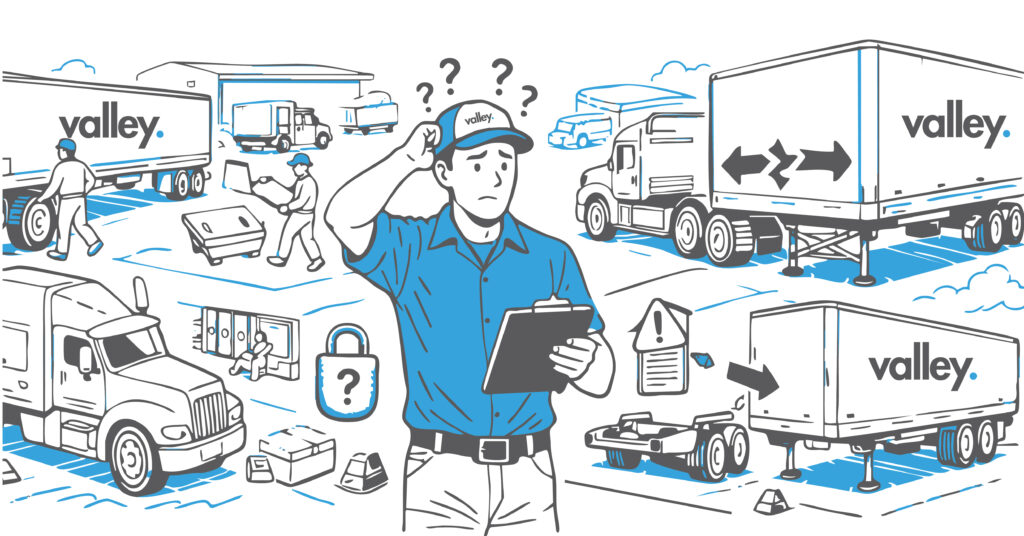
Key takeaway: Non-owned trailer liability trucking coverage protects your fleet when your drivers pull trailers you don’t own — something your standard commercial auto or physical damage policy won’t do. Without it, any damage to a borrowed or shipper-furnished trailer comes straight out of your pocket. This applies to fleet operators, owner-operators, and power-only trucks running loads where the trailer belongs to someone else.
Your driver hooks up to a shipper’s trailer, runs the load, and on the way out of a distribution center backs into a dock post. The trailer gets a crumpled rear corner. Nothing major. Until the claim comes back and your insurance company says: “That trailer isn’t on your policy.”
It’s not on your policy because you don’t own it. And your physical damage coverage only covers equipment you own.
That’s the non-owned trailer exposure. It’s not exotic. It happens on ordinary loads, with ordinary drivers, in ordinary freight yards. Most fleets don’t think about it until there’s a denied claim sitting in front of them.
What Is Non-Owned Trailer Liability in Trucking?
Non-owned trailer liability trucking coverage is a policy endorsement that extends physical damage protection — comprehensive and collision — to trailers your drivers pull that your fleet doesn’t own. The trailer belongs to a shipper, a receiver, another fleet, or a leasing company. Your truck is pulling it. If something happens to that trailer while it’s hooked up to your power unit, this coverage responds.
Without it, the trailer owner looks to you for repair or replacement costs. You’re legally responsible the moment your driver takes possession of that equipment. Your commercial auto liability policy covers damage your truck causes to other people and their property — but the specific coverage for the trailer itself, as physical property under your control, is a separate endorsement.
FMCSA financial responsibility requirements govern minimum liability filings for for-hire trucking operations, but they say nothing about physical damage to borrowed equipment. That gap is yours to fill. Most fleets don’t fill it until something goes wrong.
Why Your Standard Policy Leaves You Exposed
Standard commercial truck insurance covers owned equipment. That’s what gets scheduled on the policy: your tractors, your trailers, your power units. The policy is built around a list of specific equipment with specific values.
When your driver hooks to a trailer that isn’t on that list, the physical damage portion of your policy stops at the cab. If the trailer gets damaged — in a collision, a fire, a rollover, a vandalism incident in a drop yard — you’re looking at an out-of-pocket expense based on the current market value of that equipment.
Dry van trailers run anywhere from $20,000 to $60,000 depending on age and condition. Refrigerated units are higher. Flatbeds with specialized decking or tie-down systems higher still. One incident involving a newer 53-foot refrigerated trailer can generate a repair or replacement demand that a small fleet has no budget to absorb. And the trailer owner doesn’t care about your policy’s schedule. They care that their equipment got damaged under your driver’s watch.
Non-Owned Trailer Coverage vs. Trailer Interchange — They Are Not the Same Thing
This is where fleets get into trouble. The two coverage types sound interchangeable. They are not. Which one you need depends entirely on how your operation works.
When You Need Non-Owned Trailer Coverage
Non-owned trailer physical damage coverage applies when your driver pulls a trailer you don’t own and there is no written trailer interchange agreement in place. The coverage activates only when the trailer is physically attached to your truck. Once your driver drops it — at a receiver, in a yard, at a transfer hub — the coverage ends.
This is the right fit for most over-the-road operations where drivers pick up shipper-owned trailers, broker-arranged equipment, or spot loads where no formal interchange document exists. It’s broad in the sense that it covers any non-owned trailer your driver hooks to, but limited in the sense that detached trailers are not protected.
When You Need Trailer Interchange Instead
Trailer interchange coverage requires a written trailer interchange agreement — a formal document between your fleet and the trailer owner that spells out responsibilities, equipment details, and coverage requirements. The key difference is that interchange coverage follows the trailer whether it’s attached to your truck or sitting in a yard. You have care, custody, and control of the equipment; the policy covers it throughout that entire period.
Drop-and-hook operations, intermodal work out of ports and rail yards, and loads run under UIIA agreements typically require trailer interchange, not non-owned trailer coverage. Some asset-based brokers are now specifying interchange coverage in their load requirements even for non-UIIA work. If your drivers regularly drop trailers at facilities overnight or over a weekend, interchange is the coverage doing the work.
The practical question to ask: does your driver leave the trailer somewhere unattached? If yes, you need interchange. If your driver picks up a trailer, runs the load, and drops it back — all while attached — non-owned trailer coverage may be sufficient.
The Detached Trailer Problem Nobody Warns You About
Non-owned trailer physical damage coverage ends the moment your driver unhooks. That is not a technicality. It is a hard coverage boundary that creates real exposure for fleets that do drop-and-hook work without realizing what their policy does and doesn’t cover.
Picture this: your driver delivers to a receiver, drops the trailer as instructed, picks up an empty, and heads back. The dropped trailer gets hit in the receiver’s lot by a forklift overnight. It’s still your responsibility under the interchange arrangement your dispatcher set up verbally — but your non-owned trailer endorsement won’t respond because the trailer wasn’t attached to your truck when the damage occurred.
The trailer owner calls your fleet. The receiver denies liability because it’s not their trailer. Your insurance company denies the claim because the trailer was detached. You’re holding a repair bill for equipment you don’t own, damage you didn’t cause, on a loss your policy was never structured to cover.
This scenario plays out more often than it should. The fix is straightforward once you understand the distinction — but most fleet operators don’t find out the distinction exists until they’re in it.
What Happens When a Driver Damages a Trailer You Don’t Own
When a driver causes physical damage to a non-owned trailer, the claim process depends on whether you have the right coverage in place. If you do, your insurer sends a third-party adjuster to assess the trailer, determines current market value, and pays out up to your selected limit minus your deductible.
If you don’t have coverage, the trailer owner pursues you directly. That can mean an invoice, a demand letter, or litigation depending on the relationship and the dollar amount involved. Shippers and large asset-based operations don’t absorb trailer repair costs quietly.
The limit you select matters. If you choose a $30,000 non-owned trailer limit and the trailer is a newer refrigerated unit valued at $55,000, you’re responsible for the gap. Setting your limit based on the average replacement value of equipment your drivers typically pull — not the cheapest trailer they might ever touch — is the right way to build that endorsement. Most underwriters will want to know your typical trailer type and the value range of equipment you regularly handle.
Power-Only Operations Face the Biggest Exposure
If your fleet runs power-only — trucks without owned trailers, pulling freight broker-arranged or shipper-owned equipment — non-owned trailer liability trucking exposure is essentially constant. Every load your drivers run involves a trailer you don’t own. There’s no owned-trailer baseline to fall back on.
Power-only trucking has grown as brokers use it to fill capacity gaps and as fleets look to reduce equipment costs. But the liability structure stays the same: the moment your driver accepts a trailer, your fleet is responsible for it. The broker who arranged the load is not absorbing the risk of trailer damage. The shipper whose trailer it is will come back to you.
Non-owned trailer physical damage coverage is a standard recommendation for any power-only operation. The endorsement cost is based on the selected coverage limit and your physical damage rate — not a major line item — but the financial exposure it covers can be significant depending on the equipment your drivers handle.
How to Plug the Gap Before a Claim Forces You To
Start by auditing how your drivers actually operate. Are they pulling owned trailers exclusively, or do they pick up shipper or broker-arranged equipment? Do they drop trailers and leave them unattached? Do they run under any written interchange agreements?
The answers determine whether you need a non-owned trailer endorsement, trailer interchange coverage, or both. Some operations legitimately need both — fleets that run their own trailers most of the time but take power-only loads periodically, or fleets that do drop-and-hook at some accounts but live-unload at others.
Once you know your exposure, the endorsement needs the right limit. Undervalue it and you’ve still got a gap. Price it against the realistic value of equipment your drivers pull, not the minimum you can get away with.
Finally, check your lease agreements and broker contracts. More shippers and asset-heavy brokers are specifying trailer interchange requirements in writing. Finding out a contract requires interchange coverage after a claim — when your non-owned trailer endorsement won’t respond — is a preventable problem.
If your drivers pull trailers you don’t own and your policy doesn’t have a non-owned trailer endorsement or trailer interchange coverage, you have an uncovered exposure sitting in your operation right now. We review these gaps regularly for fleet owners who want to know where they’re actually covered. Get a coverage review at Valley Trucking Insurance
Frequently Asked Questions
Does my commercial auto liability policy cover non-owned trailer damage?
No. Commercial auto liability covers bodily injury and property damage your truck causes to third parties. Physical damage to a non-owned trailer requires a separate non-owned trailer endorsement on your policy.
What is the difference between non-owned trailer coverage and trailer interchange insurance?
Non-owned trailer coverage applies only when the trailer is attached to your truck. Trailer interchange coverage applies whenever the trailer is in your care, custody, or control — attached or not — but requires a written interchange agreement to be in force.
Do I need trailer interchange coverage if I do drop-and-hook work?
Yes, in most cases. If your drivers leave trailers at facilities unattached — overnight, over a weekend, or for any period — non-owned trailer coverage won’t respond during that time. Trailer interchange covers the trailer throughout your entire period of possession.
How much non-owned trailer coverage do I need?
Set your limit based on the realistic replacement value of the trailers your drivers typically pull. A dry van limit is very different from a refrigerated unit limit. If your drivers handle a mix, set the limit based on the highest-value equipment they regularly handle.
Does non-owned trailer coverage apply to power-only operations?
Yes. Power-only operations have constant non-owned trailer exposure since every load involves equipment the fleet doesn’t own. A non-owned trailer physical damage endorsement is a standard coverage for power-only fleets.
What happens if a shipper’s trailer gets damaged while my driver has it?
The shipper will hold your fleet financially responsible for repair or replacement costs. If you don’t have non-owned trailer coverage, that liability comes out of pocket. If you do have it, your insurer responds up to your selected limit, minus your deductible.
Does my lease or broker contract require trailer interchange coverage?
Increasingly, yes. Asset-based brokers and large shippers are specifying trailer interchange requirements in their contracts. Review any hauling agreements for equipment coverage requirements before the first load — not after a denied claim.
Is non-owned trailer liability required by FMCSA?
No. FMCSA financial responsibility requirements set minimum liability levels for for-hire interstate operations but do not mandate physical damage coverage for non-owned equipment. The requirement comes from contracts with shippers, brokers, and equipment owners — and from basic financial exposure if you don’t carry it.

Smarter Coverage. Real Support. No Hassle.