🔔 Announcement: American Trucking Insurance is now a part of Valley!
See details
🔔 Announcement: American Trucking Insurance is now a part of Valley!
See details

Leased Trucking Authority Risks: The Grey Market of Fake Insurance Certificates

Cameron Pechia / Dec 31, 2025
Reviewed by Cameron Pechia, Founder, WA Insurance License 71186
Last reviewed: 3/18/2026
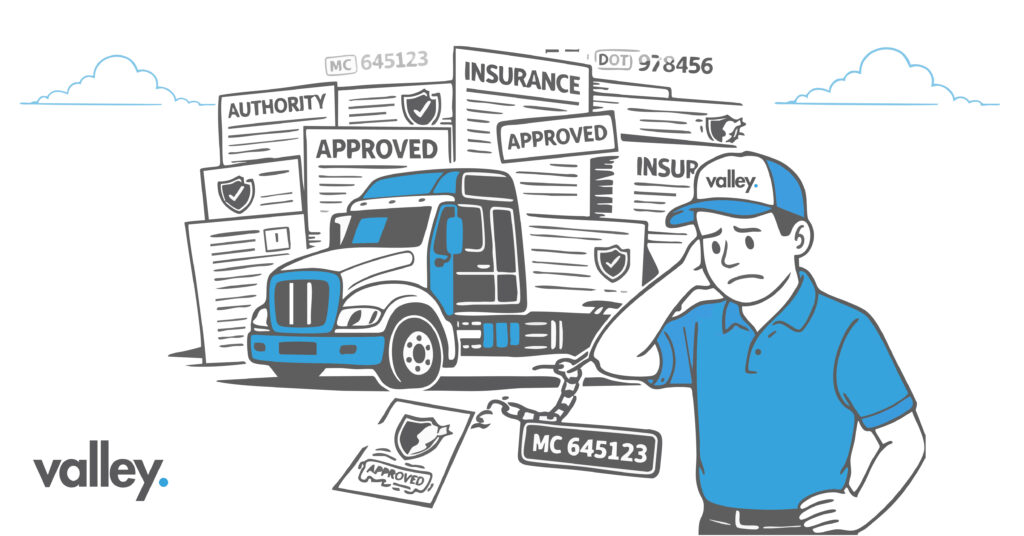
Most people assume that if a truck is on the road, it must be operating legally. The DOT number is active, the paperwork looks correct, and a certificate of insurance is on file. Unfortunately, that assumption is not always true. Beneath the surface of the trucking industry is a grey market that creates serious risk for carriers, brokers, shippers, and insurers alike.
Leased authorities, borrowed DOT numbers, and fake or misleading insurance certificates are becoming more common. These arrangements are becoming more common. Marketers promote these arrangements as shortcuts for drivers looking to avoid high insurance costs or compliance hurdles. In reality, they expose everyone involved to legal trouble, unpaid claims, and permanent damage to operating authority.
This guide explains how the grey market works, why it exists, who it harms when things go wrong, and how legitimate fleets can avoid it.
Quick Answer
The grey market of leased authorities and fake insurance certificates exists because some operators try to avoid insurance costs and compliance requirements. These arrangements involve using another company’s authority or presenting invalid proof of coverage. When accidents or audits occur, coverage is often void, claims go unpaid, and responsibility falls on the carrier, shipper, or broker. The safest defense is verification, documentation, and refusing shortcuts that bypass legal requirements.
Why This Grey Market Exists
The pressures facing trucking businesses create fertile ground for risky shortcuts.
High Insurance Costs
Commercial auto insurance premiums have risen sharply. Some drivers cannot afford proper coverage and look for cheaper alternatives that promise fast access to loads.
Barriers for New Carriers
New authorities face higher premiums, stricter underwriting, and limited carrier options. This pushes some drivers to lease onto existing authorities rather than build their own history.
Lack of Understanding
Some drivers genuinely do not understand that these arrangements are illegal or dangerous. They assume that if paperwork exists, coverage must be valid.
Weak Verification in Fast-Moving Freight
Loads move quickly. Brokers and shippers often rely on certificates and MC numbers without deeper checks, especially when capacity is tight.
What Leased Authority Really Means
Many people misunderstand leased authority.
Legitimate Leasing Arrangements
There are legal lease-on relationships where an owner operator leases onto a motor carrier. In these cases, the motor carrier controls operations, insurance, compliance, and safety. The driver operates under the carrier’s authority with proper coverage in place.
Illegitimate Authority Leasing
In the grey market, authority is “rented” on paper only. The driver operates independently but uses another carrier’s DOT number. The controlling carrier often has no oversight, no dispatch control, and no real involvement.
This breaks FMCSA regulations and voids many insurance policies.
The FMCSA clearly explains who must control operations under a motor carrier lease and why authority sharing without control is prohibited. Their guidance on operating authority and leasing rules is available through the FMCSA leasing regulations overview.
Fake and Misleading Insurance Certificates
Insurance certificates are meant to prove coverage. In the grey market, they are often misused.
Altered Certificates
Some certificates are edited to show coverage that does not exist. Names, policy numbers, and limits are changed.
Certificates That Do Not Match Operations
A policy may exist, but it does not cover the actual driver, vehicle, or cargo being hauled. The certificate looks valid, but coverage is irrelevant.
Expired or Cancelled Policies
Certificates are presented after policies have lapsed or been cancelled. Without verification, brokers and shippers may not notice.
Certificates Issued for the Wrong Entity
Coverage may apply to a different carrier or vehicle. When a claim occurs, the insurer denies responsibility.
The National Association of Insurance Commissioners explains how certificates of insurance can be misleading and why they are not proof of coverage in their consumer guidance at the NAIC insurance documentation resource.
What Happens When Things Go Wrong
The real damage appears after an accident, inspection, or audit.
Claims Are Denied
When insurers discover that the vehicle was not properly insured or operating under false authority, claims are denied. Cargo losses, injuries, and property damage go unpaid.
Shippers Get Pulled In
If the carrier has no valid coverage, injured parties often pursue the shipper or broker. Litigation expands quickly.
Brokers Face Liability
Brokers who fail to verify authority and coverage may be accused of negligent selection. This creates legal exposure and insurance issues of their own.
Authorities Get Revoked
Carriers caught leasing authority illegally can lose their DOT number. Reinstatement is difficult and sometimes impossible.
Criminal Investigations Can Follow
In severe cases involving fraud or falsified documents, law enforcement may become involved.
Real World Scenarios
These examples reflect common outcomes in the industry.
The Borrowed Authority Accident
A driver leased authority from a small carrier but operated independently. After a serious crash, the insurer denied coverage because the carrier had no control over the driver. The injured party sued the shipper and broker.
The Fake Certificate Cargo Loss
A carrier presented a certificate showing cargo coverage. After a theft, the insurer discovered the policy never existed. The carrier disappeared. The broker and shipper absorbed the loss.
The Authority Owner Who Lost Everything
A carrier rented out its authority to multiple drivers. When audits revealed the arrangement, the FMCSA revoked the authority and insurers cancelled all policies.
Why Insurance Does Not Protect These Arrangements
Insurance policies rely on accurate information.
Misrepresentation Voids Coverage
If the insured misrepresents who is driving, what is hauled, or how authority is used, insurers can void coverage.
Lack of Operational Control Breaks Policies
Policies assume the named insured controls drivers and vehicles. When that is not true, coverage fails.
Fraud Exclusions Apply
Many policies exclude fraudulent or illegal activity. Grey market arrangements often trigger these exclusions.
The Insurance Information Institute explains how misrepresentation affects coverage and claim outcomes in its overview of commercial auto insurance, available at the Insurance Information Institute.
How Legitimate Fleets Get Caught Accidentally
Not everyone involved intends to break the rules.
Trusting Paperwork Alone
Certificates and MC numbers look official. Without verification, problems go unnoticed.
Pressure to Move Freight
When capacity is tight, shortcuts happen.
Inexperienced Dispatch or Brokerage Staff
New employees may not know how to spot red flags.
Lack of Ongoing Monitoring
A carrier that was compliant last month may not be compliant today.
Red Flags to Watch For
Knowing the warning signs protects your business.
- Authority offered for a monthly fee
- No dispatch or operational oversight
- Certificates that cannot be verified with the insurer
- Drivers unwilling to confirm employer details
- Rapid changes to vehicles or drivers under one DOT number
- Coverage limits that do not match the operation
If something feels off, it usually is.
How to Protect Your Business
Prevention is far easier than recovery.
Verify Authority Directly
Check FMCSA records. Confirm status, safety scores, and inspection history.
Verify Insurance With the Insurer
Call the insurer listed on the certificate. Do not rely on the document alone.
Understand Lease Relationships
Make sure leased drivers operate under full carrier control.
Train Staff on Verification
Dispatchers and brokers should know how to spot inconsistencies.
Avoid Shortcuts
If an arrangement seems too easy or too cheap, it usually carries hidden risk.
Industry Responsibility
This problem affects everyone.
Carriers
Must refuse illegal arrangements, even when pressured.
Brokers
Must verify authority and insurance properly.
Shippers
Must demand legitimate carriers, not just capacity.
Insurers
Must educate clients on coverage limits and exclusions.
Cleaning up the grey market protects legitimate operators and lowers risk across the industry.
Final Thoughts
The grey market of leased authorities and fake insurance certificates thrives on pressure, confusion, and shortcuts. While it may look like an effortless solution to high costs or tight timelines, it creates massive legal and financial risk.
Legitimate trucking businesses protect themselves by following the rules, verifying partners, and refusing to cut corners. In the long run, compliance is far cheaper than recovery.
Review your authority, insurance, and verification processes today. Confirm that every truck operating under your name is properly insured and controlled. One careful check can prevent years of legal and financial damage.
FAQs
Is leasing authority always illegal?
No. It is legal only when the carrier maintains full control and insurance.
Is a certificate of insurance proof of coverage?
No. It is only evidence and must be verified.
Who pays when fake coverage is used?
Often the carrier, broker, or shipper, not the insurer.
Can a carrier recover after losing authority?
It is very difficult and sometimes impossible.
How can brokers protect themselves?
By verifying authority and insurance directly and consistently.

Smarter Coverage. Real Support. No Hassle.