🔔 Announcement: American Trucking Insurance is now a part of Valley!
See details
🔔 Announcement: American Trucking Insurance is now a part of Valley!
See details

How to Insure a Truck Before You Buy It (For Financing Approval)
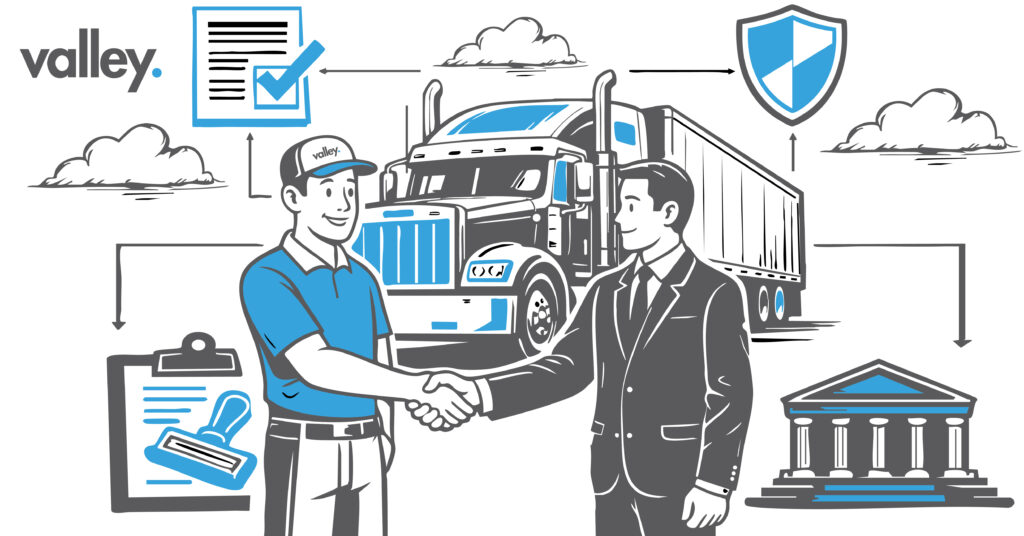
Key takeaway: If you are financing a commercial truck, you usually must insure it before the purchase is finalized. Lenders require an insurance binder showing liability and physical damage coverage on the specific truck, even if ownership has not transferred yet. Fleet owners who plan this step correctly avoid funding delays, rejected loans, and lost trucks.
One of the most common surprises for fleet owners buying a truck with financing is this simple requirement: you need insurance before you own the truck.
Dealers, banks, and leasing companies will not release funds without proof that the truck is insured. If you wait until the last minute or assume a quote is enough, the deal can stall or fall apart entirely.
Understanding how to insure a truck before you buy it is not complicated, but the timing and details matter. This guide walks through exactly how the process works, what lenders expect, and how to avoid costly mistakes.
Why lenders require insurance before truck purchase
When a lender finances a commercial truck, they are protecting their collateral. Until the loan is paid off, the truck represents financial risk.
Lenders require insurance upfront because:
- The truck could be damaged or totaled the moment it leaves the lot
- Liability claims could arise immediately once the truck is operated
- The lender must be listed as loss payee to protect their interest
This requirement is standard across banks, credit unions, and equipment finance companies.
Can you insure a truck you do not own yet
Yes. This is extremely common in trucking.
Insurance carriers allow coverage to be bound on a vehicle prior to purchase as long as:
- The truck will be owned or leased by the named insured
- The VIN or sufficient vehicle details are provided
- The effective date matches the purchase or funding date
Ownership transfer happens after funding, but insurance must be active first.
What type of insurance lenders require
Most lenders require two core coverages before releasing funds.
Physical damage coverage
This includes comprehensive and collision coverage on the truck itself.
Lenders care about:
- Stated value or actual cash value
- Deductible amounts
- That coverage is active on day one
If physical damage is missing, funding will not proceed.
Liability limits
Lenders also require proof of commercial auto liability coverage.
Minimum limits vary based on:
- Federal or state filing requirements
- Type of operation
- Lender internal standards
FMCSA financial responsibility rules apply when operating interstate.
Always verify lender-specific requirements in writing.
How the insurance binder process works
A binder is not the same as a quote. A binder is official proof that coverage is active.
The typical process looks like this:
- You select the truck and confirm purchase details
- Your insurance agent submits the vehicle to the insurance carrier
- Coverage is bound with an effective date
- A binder is issued showing:
- Named insured
- Vehicle details or VIN
- Liability and physical damage limits
- Lender listed as loss payee or additional interest
Most lenders accept binders as temporary proof until the full policy is issued.
VIN problems and how to handle them
VIN issues are a common delay.
Problems include:
- Dealer provides incorrect or partial VIN
- Truck is still being titled
- VIN changes due to last-minute vehicle swaps
Solutions:
- Request the VIN early from the dealer
- Confirm VIN accuracy before binding
- If VIN is unavailable, some insurance carriers may bind using full unit details temporarily, but many lenders will not accept this
Do not assume a placeholder will work. Ask your lender first.
Timing mistakes that delay financing
The biggest financing delays usually come from insurance timing errors.
Common mistakes include:
- Waiting until loan approval instead of conditional approval
- Requesting a quote instead of a binder
- Binding coverage with the wrong effective date
- Forgetting to list the lender correctly
Even a one-day gap can force lenders to re-review documents.
Checklist to insure a truck before you buy it
Use this checklist to keep the deal moving:
- Confirm lender insurance requirements in writing
- Get full truck details including VIN
- Decide liability limits and deductibles
- Bind physical damage coverage
- Request an insurance binder
- Verify lender is listed correctly
- Match effective date to funding date
- Send binder directly to lender
Simple, but every step matters.
Regulatory and compliance considerations
Insurance must align with your operating authority.
If operating interstate, FMCSA insurance filing requirements apply.
State-level insurance rules may also apply depending on where the truck is registered. Verify requirements with your state transportation or insurance authority.
FAQ
Do lenders accept insurance quotes?
No. Most lenders require an insurance binder, not a quote.
Can I add the truck to my policy after purchase?
Not if you are financing. Insurance must be active before funding.
Who should be listed as loss payee?
The financing company or leasing company, exactly as they specify.
What if the purchase falls through?
Coverage can usually be canceled or adjusted if the truck is not purchased.
Does leasing change the insurance process?
Leasing often has stricter insurance wording and loss payee requirements.
How fast can insurance be bound?
In many cases, same day, if all information is ready.
If you are buying a truck with financing, the insurance step should never be an afterthought. Valley Trucking Insurance helps fleet owners line up coverage, bind policies correctly, and avoid funding delays before purchase. If you are planning a truck purchase, request a coverage review now so financing approval does not slow you down.
Smarter Coverage. Real Support. No Hassle.