🔔 Announcement: American Trucking Insurance is now a part of Valley!
See details
🔔 Announcement: American Trucking Insurance is now a part of Valley!
See details

How Power-Only Trucking Changes Insurance Exposure

Cameron Pechia / Feb 27, 2026
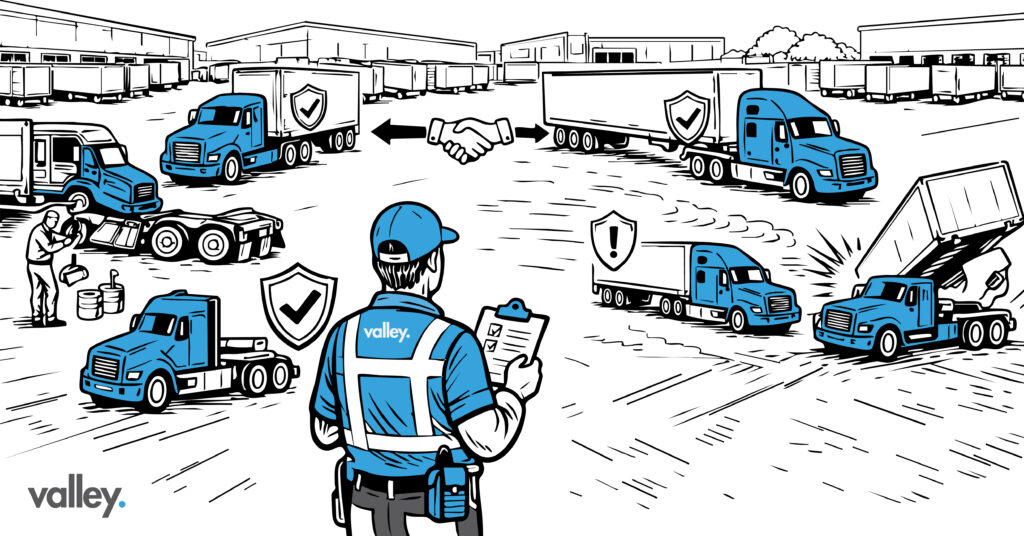
Key takeaway: Power-only trucking is growing fast in today’s freight market. Instead of hauling your own trailer, your trucking company provides only the tractor and driver while pulling a trailer owned by a broker, shipper, or another trucking operation.
At first glance, it looks like a lower-investment model. No trailer purchase. Less equipment ownership. More flexibility. But power-only trucking insurance exposure is not the same as traditional operations. In many cases, it can increase your liability risk in ways fleets do not fully anticipate.
Why This Issue Matters
The Federal Motor Carrier Safety Administration requires interstate trucking companies to maintain minimum liability coverage depending on commodity type. Those requirements are outlined by FMCSA.
However, minimum limits do not address operational complexity.
Power-only setups introduce:
- Third-party trailer damage exposure
- Unclear cargo responsibility lines
- Contractual indemnification clauses
- Increased claim disputes
As freight markets tighten, many fleets move into power-only to stay profitable. According to reporting by FreightWaves, power-only capacity has expanded as brokers seek flexible capacity solutions.
More contracts mean more paperwork. More paperwork means more exposure if your insurance structure is not aligned.
How Power-Only Trucking Insurance Exposure Actually Changes
1. Trailer Interchange Becomes Critical
If you are pulling someone else’s trailer under a written interchange agreement, you typically need trailer interchange coverage. Standard liability policies do not automatically cover physical damage to non-owned trailers.
If a trailer tips, burns, is stolen, or is damaged while under your control, you could be responsible.
Without proper trailer interchange limits, that claim comes out of pocket.
2. Cargo Responsibility May Shift
Many power-only agreements specify when cargo responsibility transfers. Is it at hook? At seal verification? At dispatch confirmation?
If the trailer is preloaded and sealed, you may still be responsible for cargo loss unless your contract clearly states otherwise.
Insurance Journal frequently reports on cargo claim disputes where contractual wording determines who pays.
Your cargo policy must reflect whether you are handling drop-and-hook, sealed trailers, or live loads.
3. Non-Owned Equipment Liability
Power-only increases exposure to non-owned equipment. While your tractor is insured, the trailer is not yours. If your driver damages landing gear, refrigeration units, or lift gates, you could face repair costs.
Physical damage coverage for your tractor does not extend to that trailer unless endorsed properly.
4. Contractual Risk Increases
Power-only contracts often include indemnification clauses. Some require you to assume responsibility even for losses that are partially outside your control.
Insurance responds to covered causes of loss, not broad contractual promises.
If your contract says you are responsible for “any and all loss,” your policy may not follow that language.
That is where power-only trucking insurance exposure becomes dangerous. You may think you are covered because you carry liability and cargo, but contract wording can override expectations.
Liability Limits and Severity Trends
The severity of commercial auto claims continues to rise due to medical inflation and litigation trends. The FMCSA’s safety and compliance data show that larger verdicts are not rare events.
When you combine rising verdicts with power-only contractual exposure, underinsured fleets face serious financial risk.
Even if the trailer owner carries separate coverage, plaintiffs often sue every involved party.
That includes the trucking company pulling the load.
Common Gaps in Insurance for Power-Only Trucking Operations
Many fleets move into power-only quickly. Insurance policies often lag behind operational changes.
Here are common coverage gaps:
- No trailer interchange coverage
- Insufficient cargo limits for higher-value drop-and-hook freight
- No hired and non-owned coverage adjustments
- No contractual liability review
- Misclassification of operation type on underwriting applications
Underwriters price risk based on declared operations. If your policy states “general freight with owned trailers” and you are running power-only contracts daily, you have a disclosure problem.
Real-World Scenarios
Scenario 1: Damaged Refrigerated Trailer
A fleet hooks to a broker-owned reefer trailer. During transit, the refrigeration unit fails due to mechanical damage. The cargo spoils.
The trailer owner claims physical damage. The shipper claims cargo loss. The broker points to the contract.
If the fleet lacks adequate trailer interchange and reefer breakdown coverage, they face layered exposure.
Scenario 2: Sealed Load Theft
Driver hooks to a sealed trailer. Cargo is stolen at a truck stop. The broker argues the load was under the trucking company’s care, custody, and control.
If cargo coverage excludes unattended vehicle theft without security compliance, the claim may be denied.
Power-only does not eliminate cargo responsibility.
Scenario 3: Drop-and-Hook Accident
A driver connects improperly and the trailer detaches, causing roadway damage and injury.
Plaintiffs sue the trucking company, the broker, and the trailer owner.
Liability policies respond first, but contractual indemnity may shift cost sharing.
Underwriting Questions Fleets Should Expect
If you move into power-only operations, expect underwriters to ask:
- Percentage of power-only vs traditional hauling
- Written trailer interchange agreements in place
- Average cargo value
- Security protocols for drop-and-hook
- Contract review procedures
Being transparent matters. Misrepresentation can void coverage.
Risk Management Steps for Fleet Owners
If you are considering or expanding power-only, take these steps:
- Review all broker and shipper contracts.
- Confirm trailer interchange limits match realistic trailer values.
- Evaluate cargo limits based on highest expected load value.
- Verify theft compliance requirements.
- Confirm your insurance carrier understands your operational model.
This is not about buying more coverage blindly. It is about aligning coverage to exposure.
Does Power-Only Reduce Risk?
Some fleets assume that because they do not own trailers, their risk is lower.
That is not automatically true.
You may avoid trailer depreciation and maintenance, but insurance exposure shifts toward contractual liability and non-owned equipment responsibility.
In some cases, severity risk increases because of shared-party litigation.
FAQs
Does power-only require different insurance than standard trucking?
Often yes. Trailer interchange coverage and contract review become more important.
Is trailer interchange mandatory?
It is required when you operate under a written interchange agreement involving non-owned trailers.
Does cargo insurance automatically cover sealed trailers?
Not always. Responsibility depends on contract terms and policy wording.
Can brokers require higher limits for power-only?
Yes. Many contracts require specific cargo and liability limits.
Does the FMCSA require different filings for power-only?
No separate filing category exists, but you must still meet federal minimum liability requirements.
What happens if my contract assumes broader liability than my policy?
Your policy pays only covered claims. The remaining balance becomes your responsibility.
Final Thoughts
Power-only trucking can create opportunity. It can also quietly increase your exposure if insurance and contracts are not aligned.
Before expanding into power-only freight, review your operational model, contractual language, and policy structure.
If you are running or planning to run power-only operations, now is the time to review your exposures, DOT compliance needs, and coverage structure. Reach out to Valley Trucking Insurance for a detailed coverage review or quote tailored to your fleet.

Smarter Coverage. Real Support. No Hassle.