🔔 Announcement: American Trucking Insurance is now a part of Valley!
See details
🔔 Announcement: American Trucking Insurance is now a part of Valley!
See details

Hot Shot Trucking Insurance Cost vs Class 8: Why the Numbers Look So Different

Cameron Pechia / Jun 26, 2026
Reviewed by Cameron Pechia, Founder, WA Insurance License 71186
Last reviewed: 6/26/2026
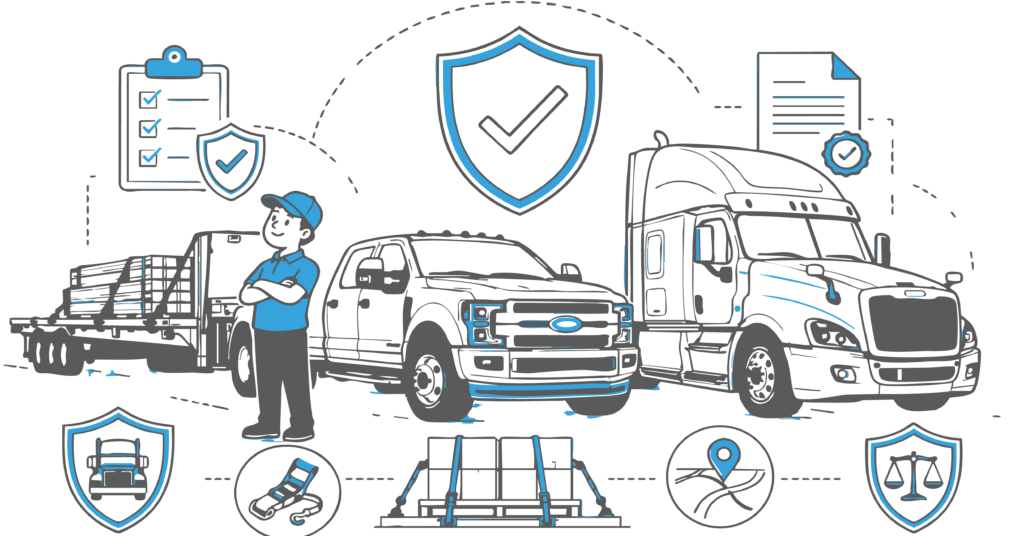
Key takeaway: Hot shot trucking insurance cost in 2026 typically runs $600 to $2,500 per month, or roughly $7,000 to $30,000 per year per truck. It prices differently than Class 8 because it isn’t Class 8 — different gross weight rating, different cargo profile, different driver pool, and in many cases a different federal liability minimum. If you’re comparing a 1-ton dually with a gooseneck against an 80,000-pound sleeper tractor and wondering why the premiums don’t line up, the short answer is that insurance carriers aren’t rating the same risk. The longer answer is below, and it matters whether you’re starting a hot shot operation or adding one to an existing fleet.
You got a quote on a hot shot truck and the number looked nothing like what you pay on your Class 8 units. Either way too low, way too high, or just structured differently. That’s normal. Hot shot operations sit in their own underwriting lane, and the people quoting Class 8 every day aren’t always set up to write a 1-ton pickup pulling a 40-foot gooseneck. Here’s what’s actually driving the price, and where Class 8 operators get tripped up when they assume the math will be similar.
This piece is built for two readers. Owner-operators pricing their first hot shot truck, and existing fleet operators thinking about adding a hot shot unit or two for time-sensitive loads. The framework is the same for both.
What hot shot trucking insurance actually costs in 2026
Most hot shot operators in 2026 are paying between $7,000 and $30,000 per year per truck, which works out to roughly $600 to $2,500 per month. That spread is wide because hot shot is a wide category — a non-CDL operator running local construction loads inside a 150-mile radius isn’t the same risk as a Class A CDL hot shot running auto transport across six states.
Industry averages place primary liability alone around $580 to $600 per month for a mid-sized operation, with physical damage adding roughly $160 per month and cargo coverage running another $200 to $300 depending on commodity and limit. Stack those and you land in the $1,000 to $1,500 monthly zone for a typical liability plus cargo plus physical damage package.
What moves you above or below that range: authority age, driving record, garaging ZIP, operating radius, cargo type and value, equipment value, and whether you’re new authority or have a few years of clean loss runs behind you. New authority is the single biggest premium driver I see at quote time.
Why hot shot insurance doesn’t price like Class 8
This is where most operators get confused. The intuition is that smaller truck equals smaller premium. Sometimes yes, sometimes no, and the reason has nothing to do with the size of the vehicle.
Different weight class, different rating bucket
A non-CDL hot shot rig has to stay under 26,000 pounds combined gross vehicle weight rating between truck and trailer. A Class 8 sleeper tractor with a 53-foot dry van runs 80,000 pounds loaded. From an underwriter’s perspective these are not the same vehicle. They have different accident severity profiles, different repair costs, different liability exposure when something goes wrong.
But here’s where it gets counterintuitive. Federal minimum liability for both is generally $750,000 for non-hazardous freight in interstate for-hire operations under 49 CFR Part 387. So a hot shot truck has to carry the same liability floor as your sleeper tractor even though it weighs a third as much. That alone keeps hot shot premiums from being as cheap as people expect.
Different cargo, different exposure
Class 8 freight is usually palletized dry van or refrigerated cargo. Predictable. Tendered through brokers with paperwork. Hot shot freight is the load nobody else could get there fast enough to haul — construction equipment, oil field parts, machinery, steel, the occasional vehicle. Higher value per linear foot, weirder securement requirements, more exposure to cargo claims from improper tie-down. Insurance carriers price that exposure in.
Different driver profile and operating radius
A Class 8 operation typically has a Class A CDL driver pool with established MVRs and a defined lane structure. Hot shot pulls from a wider driver pool — including non-CDL operators in the under-26,000-pound segment — and runs more variable routes. Underwriters charge more for variability. A predictable lane with the same driver every week prices better than a truck that might be in Texas Monday and Ohio by Thursday.
The coverages that make up a hot shot premium
A hot shot policy is built as a stack, not a single number. Knowing what’s in the stack is how you spot whether a “cheap” quote is actually missing coverage you need.
Primary liability is the biggest line item. This is the federal minimum coverage that pays bodily injury and property damage to others, and it’s what gets filed with FMCSA on Form BMC-91 or BMC-91X to activate your authority. Brokers and shippers commonly require $1 million even though the federal floor is $750,000 for non-hazardous freight.
Cargo coverage protects the freight you’re hauling. Federal minimums are low — $5,000 per vehicle and $10,000 per occurrence under historical FMCSA rules — but practical minimums set by brokers and shippers are usually $100,000. If you haul auto transport, expect $250,000 or higher.
Physical damage covers your truck and trailer against collision, theft, vandalism, and named perils. This one scales directly with equipment value. A new $80,000 dually with a $40,000 gooseneck will cost more to insure than an older rig.
General liability covers things that happen off the truck — slips at a customer site, damage to property at a delivery point. Often required by brokers and lenders.
Non-trucking liability and bobtail coverage matter if you’re leased on to a motor carrier. Different coverage triggers, different gaps. Worth a separate conversation.
What pushes a hot shot premium up — and what brings it down
The factors that move a hot shot quote the most are not what most operators think. It’s rarely the truck itself.
Authority age is the heaviest single factor. New authority — under 12 months — gets surcharged hard because insurance carriers have no loss data on you. You’ll often pay 30% to 50% more in year one than you will in year three with the same operation and a clean record.
Motor vehicle record violations on the driver. A single major moving violation in the last three years can add hundreds of dollars per month. Multiple minor violations stack the same way.
Garaging ZIP code. Where the truck is parked overnight matters more than where it operates. Urban ZIPs price higher than rural ones because of theft, vandalism, and accident frequency in the surrounding miles.
Operating radius. Local radius (under 200 miles) prices better than regional or long-haul. The reason is simple — more miles equals more exposure to claims.
Cargo type and value. Construction equipment and machinery price differently than steel coil or general flatbed freight. High-theft commodities like electronics or copper add premium fast.
What brings the number down: a clean three-year MVR, two-plus years of operating authority, a tight defined radius, predictable cargo, and a $2,500 to $5,000 physical damage deductible instead of $1,000.
When CDL hot shot operators get rated more like Class 8
Once you cross 26,001 pounds combined GVWR you need a Class A CDL, and at that point the underwriting starts to look more like a Class 8 quote even though you’re still calling yourself hot shot. The truck doesn’t change. The paperwork does. CDL hot shot operators running larger 40-foot gooseneck setups with heavy loads can see premiums that look very close to small Class 8 operations because the cargo, radius, and driver profile start to overlap.
Average annual premiums for CDL hot shot trucking commonly run $5,000 to $30,000 depending on coverage and equipment, which is exactly the spread you see on smaller Class 8 operations. The line between “hot shot” and “small Class 8 fleet” gets blurry above that weight threshold, and so does the pricing.
How a Class 8 fleet should think about adding a hot shot truck
If you already run Class 8 and you’re considering a hot shot unit for time-sensitive loads, do not assume your current policy can just add it. Hot shot is often underwritten as a separate risk class — sometimes by a different insurance carrier entirely, because the agent or wholesaler writing your Class 8 fleet may not have a market for sub-26,000-pound combinations.
The mistake I see most often is a fleet owner adds a hot shot truck to their existing schedule, assumes it’s covered the same way, and finds out at claim time that the cargo coverage they have on the Class 8 fleet doesn’t extend to the hot shot loads at the limits the broker required. The fix is to either endorse the hot shot operation properly onto the existing policy with the right cargo and physical damage limits, or write it on a separate policy designed for the smaller-truck profile.
Either way, the conversation needs to happen before the first load — not after the first claim.
Before you commit to a hot shot operation or quote one against your current Class 8 program, get a full coverage and cost review from someone who writes both. Hot shot is a niche that gets undersold and underwritten badly when the agent doesn’t know the segment. Send your operation details to Valley Trucking Insurance and we’ll line up a real comparison — federal filings, broker-acceptable limits, and pricing that matches how you actually run.
Frequently Asked Questions
How much does hot shot trucking insurance cost per month?
In 2026, most hot shot operators pay between $600 and $2,500 per month, or about $7,000 to $30,000 per year per truck. New authority, wide operating radius, and higher-value cargo push the number toward the top of that range.
Why is hot shot insurance sometimes more expensive than Class 8?
Because federal minimum liability requirements apply to both, but hot shot operations often run more variable routes, haul more diverse cargo, and have less established loss history — especially on new authority. Underwriters charge for that uncertainty.
Do non-CDL hot shot operators need the same insurance as CDL operators?
The federal liability minimum of $750,000 for non-hazardous interstate for-hire freight applies the same way once you’re over 10,001 pounds GVWR. But broker requirements, cargo expectations, and rating factors usually push CDL hot shot premiums higher because the loads are bigger and the operating radius is wider.
What’s the minimum liability for hot shot trucking?
Federal minimum is $750,000 for non-hazardous freight in interstate for-hire operations under 49 CFR Part 387. Most brokers and shippers require $1 million regardless of the legal minimum.
How much is cargo insurance for hot shot trucking?
Cargo coverage typically runs $200 to $500 per month depending on limit and commodity. Federal minimum is $5,000 per vehicle, but practical minimum is $100,000 because brokers and shippers require it. Auto transport hot shot loads usually need $250,000 or higher.
Can I add a hot shot truck to my existing Class 8 fleet policy?
Sometimes, but not always at the right limits. Many Class 8 policies don’t extend cargo and physical damage limits to hot shot operations the way the broker requires. The safer path is either a proper endorsement with adjusted limits or a separate policy written for the hot shot profile.
Why is new authority hot shot insurance so expensive?
Insurance carriers have no loss data on you yet. New authority — under 12 months — gets surcharged because there’s no track record. Year one is typically 30% to 50% higher than year three with the same operation and a clean record.
What’s the cheapest way to lower hot shot insurance premiums?
Tighten your operating radius, keep your MVR clean, raise your physical damage deductible to $2,500 or $5,000, avoid high-theft cargo, and build at least 12 months of clean operating history. None of these shortcuts work if they create coverage gaps the broker won’t accept.

Smarter Coverage. Real Support. No Hassle.