🔔 Announcement: American Trucking Insurance is now a part of Valley!
See details
🔔 Announcement: American Trucking Insurance is now a part of Valley!
See details

Ghost Trucking Scams: How Criminals Fake Fleets and Hurt Your Authority

Cameron Pechia / Jan 28, 2026
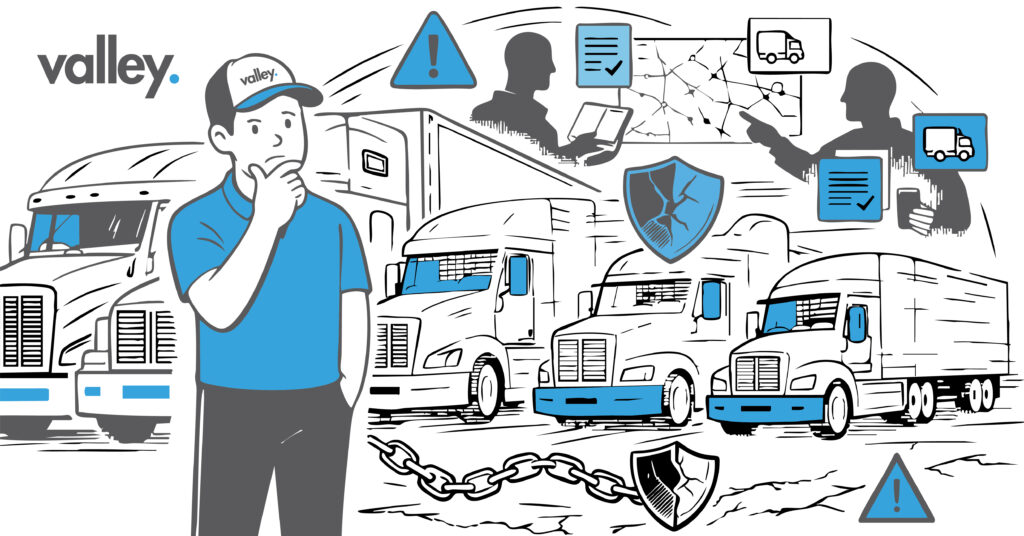
Key takeaway: Ghost trucking scams involve criminals creating fake or stolen trucking identities to move freight, commit fraud, or bypass compliance. These scams put legitimate carriers at risk by damaging authority records, triggering audits, and creating insurance complications for fleets that did nothing wrong.
Ghost trucking scams are no longer rare edge cases. They are a growing problem across U.S. freight networks, and legitimate carriers often discover the damage only after their authority, insurance, or reputation has already been affected.
Criminals exploit gaps in verification, overload brokers with volume, and hide behind stolen DOT numbers or shell companies. When something goes wrong, investigators follow the paper trail and that trail often leads to an unsuspecting, properly insured carrier.
Understanding how these scams work is the first step to protecting your fleet.
What are ghost trucking scams?
Ghost trucking scams occur when criminals pose as legitimate motor carriers or fleets using fake, stolen, or manipulated credentials. These operations often exist only on paper.
They may:
- Use stolen DOT or MC numbers
- Register shell companies with fake addresses
- Clone legitimate carrier profiles online
- Disappear after a single load or claim
The Federal Motor Carrier Safety Administration has repeatedly warned carriers about identity misuse and fraudulent registrations in FMCSA fraud prevention guidance.
How criminals create fake trucking fleets
Ghost fleets are designed to look real long enough to move freight or collect payments.
Stolen DOT and MC numbers
One of the most common tactics is authority theft. Criminals copy publicly available DOT or MC numbers and use them to:
- Book loads with brokers
- Obtain fraudulent certificates of insurance
- Create fake websites or email domains
Because DOT records are public, bad actors rely on speed and volume before discrepancies are noticed.
Shell companies and fake addresses
Some ghost fleets register new entities using:
- Virtual offices or abandoned properties
- Temporary phone numbers
- Disposable email accounts
These companies may technically exist on paper but have no actual trucks, drivers, or assets. FMCSA registration requirements outline what legitimate carriers must maintain.
Why ghost fleets hurt legitimate carriers
Even if your company is not involved, ghost trucking scams can still cause real harm.
Common consequences include:
- Your authority being flagged or reviewed
- Delayed or frozen payments during investigations
- Insurance carriers questioning exposure
- Increased scrutiny during audits or renewals
Once your DOT number is associated with suspicious activity, clearing your name takes time and documentation.
How ghost trucking scams impact your authority and insurance
Insurance carriers and regulators track patterns, not intent. If your authority appears in multiple questionable transactions, insurers may respond by:
- Requesting additional underwriting documentation
- Increasing premiums at renewal
- Adding coverage restrictions
- Declining to continue coverage
This is why proactive risk management matters. DOT enforcement processes do not differentiate quickly between victims and participants DOT compliance overview.
Warning signs your authority may be targeted
Fleet owners should watch for red flags such as:
- Brokers calling about loads you never hauled
- Certificates of insurance you did not request appearing in circulation
- Sudden compliance inquiries with no clear cause
- Online carrier profiles you did not create
Early detection limits damage.
How fleet owners can protect themselves
No defense is perfect, but strong operational hygiene reduces risk.
Practical steps include:
- Monitor FMCSA records regularly for unauthorized changes
- Use secure email domains, not free providers
- Limit public exposure of sensitive documents
- Work with brokers that verify carriers thoroughly
- Maintain clear insurance documentation and endorsements
The Department of Transportation encourages carriers to report suspected fraud immediately DOT reporting guidance [ ].
If you operate a fleet, ghost trucking scams are not just someone else’s problem. Valley Trucking Insurance works with carriers to review authority exposure, compliance gaps, and coverage structure before fraud turns into a claim or cancellation. A proactive coverage review today can save months of cleanup later.
FAQ
What is a ghost trucking scam?
- A ghost trucking scam is when criminals pose as a legitimate carrier or fleet using fake or stolen credentials to move freight or commit fraud.
Can my DOT authority be stolen?
- Yes. DOT and MC numbers are public, which makes monitoring and quick reporting essential.
Will insurance cover losses caused by ghost fleets?
- Coverage depends on policy terms and circumstances. Victims often still face scrutiny and delays.
How do brokers verify real carriers?
- Most use FMCSA records, insurance verification, and identity checks, but gaps still exist.
What should I do if my authority is misused?
- Contact FMCSA, notify your insurer, and document everything immediately.
Are small fleets more at risk?
- Yes. Smaller carriers often have less monitoring in place and are easier targets.

Smarter Coverage. Real Support. No Hassle.