🔔 Announcement: American Trucking Insurance is now a part of Valley!
See details
🔔 Announcement: American Trucking Insurance is now a part of Valley!
See details

Why Forced Dispatch Models Raise Insurance Concerns

Cameron Pechia / Jun 10, 2026
Reviewed by Cameron Pechia, Founder, WA Insurance License 71186
Last reviewed: 5/10/2026
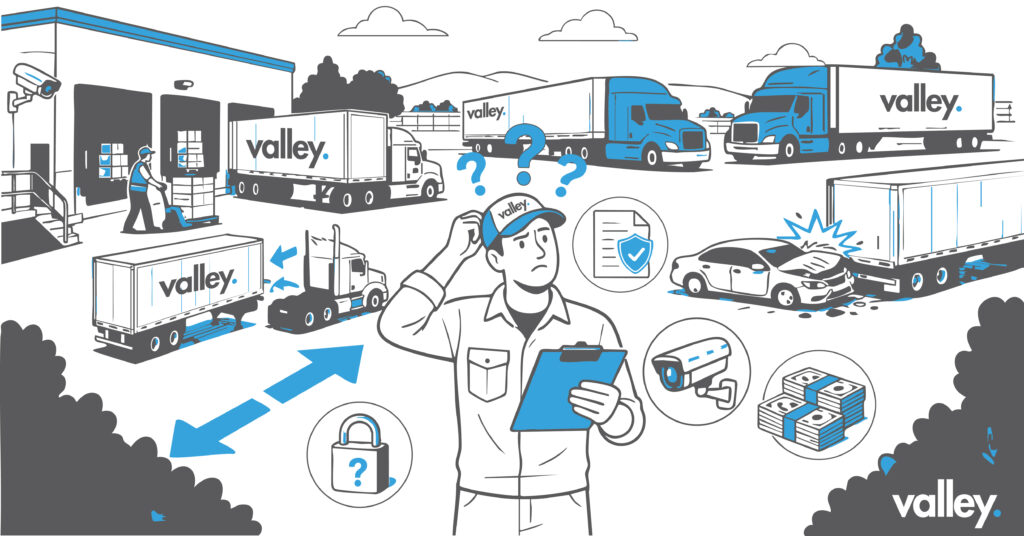
Key takeaway: Forced dispatch trucking insurance risk is the exposure a fleet or owner-operator takes on when drivers are assigned loads without genuine consent — or pressured to run loads that create regulatory violations. The core problem: most commercial trucking policies are written around the assumption that dispatch decisions are lawful and voluntary. When a load is forced over a driver’s objection, when it pushes a driver past their hours of service limit, or when a lease agreement creates ambiguity about who controls dispatch, the coverage picture gets complicated. This applies to fleet owners, leased owner-operators, and any trucking operation using a model where drivers don’t have real load choice.
You’ve got a driver sitting at a terminal. There’s a load that needs to move. He says he’s too close to his hours limit. Dispatch tells him to take it anyway.
That conversation happens hundreds of times a day across the industry. Most fleet owners think of it as an operational issue. It is. It’s also an insurance issue, and the two are connected in ways that show up when a claim gets filed.
When a driver runs a load under pressure and something goes wrong — an accident, a cargo loss, a DOT audit that turns up HOS violations — the question of whether the fleet directed that trip becomes material to how the claim gets handled. “He decided to take the run” is a lot harder to argue when dispatch records say otherwise.
This post is about what forced dispatch actually means for your coverage, where the gaps are, and what to do about it before you find out the hard way.
What Is Forced Dispatch in Trucking?
Forced dispatch is when a trucking operation requires drivers to accept load assignments without giving them a genuine choice to refuse — or when drivers are pressured into loads that they would otherwise decline for safety, hours, or personal reasons.
For company drivers under W-2 employment, some level of dispatch direction is standard. The employer assigns work; the employee does it. That’s normal. The legal line is crossed when dispatch requires a driver to violate FMCSA safety regulations — exceed hours of service limits, operate an unsafe vehicle, skip a required inspection. Federal law protects drivers who refuse assignments for safety-related reasons under the Surface Transportation Assistance Act (STAA), codified at 49 U.S.C. § 31105.
For leased owner-operators, it gets more complicated. These drivers have signed lease agreements that put them under a trucking company’s authority. The lease is supposed to give them operational flexibility — but in practice, many leases include language that effectively creates forced dispatch conditions, assigning loads without consent or building in financial penalties for refusals. The FMCSA’s Truck Leasing Task Force spent more than a year examining exactly these arrangements and found the power imbalance between trucking operations and leased drivers to be severe.
Why Forced Dispatch Creates Insurance Risk
HOS Violations Put the Fleet on the Hook
Hours of service rules exist for a reason. A driver who has been on duty for 14 hours has slower reaction times, higher fatigue-related accident risk, and — if they’re in a crash — a paper trail on their ELD that shows exactly how many hours they’d been running.
FMCSA’s hours of service regulations under 49 CFR Part 395 cap property-carrying drivers at 11 hours of driving within a 14-hour window after 10 consecutive hours off duty. When a driver takes a load that pushes them past that threshold, the ELD doesn’t lie.
In a post-accident investigation, one of the first things an opposing attorney or a cargo claimant’s investigator will do is pull the driver’s logs. If the driver was in HOS violation at the time of the incident, that violation becomes evidence of negligent dispatch — meaning the trucking operation that pushed the load is exposed, not just the driver. Some underwriters will dispute or reduce a liability payout when HOS violations are a contributing factor. Others will cover the claim but non-renew the policy. Neither outcome is good.
Disputed Consent Blurs Liability Lines
Here’s the scenario that comes up more than you’d think. A driver takes a load under pressure, something goes wrong during transit, and the driver says dispatch forced the assignment. The trucking operation says the driver accepted it voluntarily. Now you have a disputed factual record — and your insurance company is sorting through it during a claim.
Commercial auto liability policies cover accidents that happen in the course of authorized operations. When the driver’s authority to take that specific load is in dispute, “authorized operations” becomes a live question. If a driver can show they raised a safety objection that was overridden — through dispatch messages, text logs, or witness accounts — the claim narrative shifts from a driver error to a fleet management failure. Fleet management failures tend to be more expensive.
This is where dispatch record-keeping matters directly to your coverage. Trucking operations that can document voluntary load acceptance have cleaner claims. The ones that can’t are handing the opposing side a tool.
Lease Agreement Conflicts With Coverage Terms
For leased owner-operators, there’s a third layer. Under 49 CFR Part 376, the lease agreement between the trucking operation and the owner-operator must specify who is responsible for each type of insurance coverage. The operation holds primary liability while the equipment operates under its authority. The owner-operator typically carries their own bobtail or non-trucking liability for off-dispatch movements.
The problem: forced dispatch blurs the boundary between “on dispatch” and “off dispatch.” If a driver is pressured into a load they didn’t agree to, and then they’re involved in an incident during or after that trip, the question of whose coverage applies depends partly on whether that driver was genuinely dispatched or not. Lease agreements that strip drivers of meaningful load choice create ambiguity about dispatch status. That ambiguity lands in the middle of coverage disputes.
What Your Policy Probably Doesn’t Say About Forced Dispatch
Most trucking insurance policies don’t contain any language about forced dispatch. They cover the truck, the driver, the cargo, and the liability. What they don’t do is account for the operational decisions that led to a particular trip.
That’s the gap. Your policy is written for normal operations. It covers the accident, not the management decision that preceded it. But when a lawsuit gets filed, or a cargo claim comes in, or FMCSA audits your HOS records and finds a pattern of violations, the underwriting and legal picture gets a lot more complicated than the policy language suggests.
A few things to know about how this plays out in practice:
- Liability disputes involving driver testimony about forced dispatch can turn a routine accident claim into an extended coverage investigation.
- Pattern HOS violations found during a DOT audit can affect your CSA scores, your SMS profile, and your insurability at renewal — not just one claim.
- Cargo claims where a driver was fatigued at delivery due to forced dispatch can introduce questions about reasonable care and policy conditions.
None of this means your insurer will deny a claim outright. What it means is that forced dispatch creates the conditions for contested claims, higher severity payouts, and renewal problems that a well-run operation shouldn’t be generating.
The Safety-Refusal Exception Every Driver Should Know
Federal law draws a clear line here. Under the STAA, drivers cannot be terminated, suspended, reassigned to worse loads, or otherwise penalized for refusing a load that would require them to violate FMCSA safety regulations. That includes:
- Refusing a load that would put them over their HOS limit
- Refusing to operate a vehicle with a known safety defect
- Reporting a safety violation to FMCSA or another government agency
What the STAA does not protect is a driver who refuses a load for non-safety reasons. If a driver simply doesn’t want a particular route, that’s not a protected refusal under federal law. The distinction matters for fleet owners: a driver who documents that they refused due to hours, vehicle condition, or a specific safety concern is in a much stronger legal position than one who just said no.
From an insurance standpoint, the implication runs the other direction. If your operation has a pattern of overriding documented safety-based refusals — and that pattern shows up in your dispatch records — you have created evidence of systematic negligent dispatch. That’s a category of exposure that goes well beyond individual claims.
How Fleet Owners Can Reduce Forced Dispatch Exposure
This comes down to documentation and policy, not just insurance.
On the operational side: put your load acceptance process in writing. If drivers have the ability to flag safety concerns before accepting a dispatch, that process should be documented and consistent. Every safety-based refusal should be recorded — not because you’re expecting litigation, but because a clean record protects both the driver and the operation.
On the hours of service side: use your ELD data. Review HOS patterns before they become audit findings. Drivers who are consistently running at the edge of their hours limit are an indication that your dispatch model is putting pressure on the regulatory boundary. That’s a compliance risk before it’s an insurance risk — but it becomes both quickly.
On the insurance side: talk to your broker about how your current policy handles liability claims that involve driver testimony about dispatch direction. Not every broker knows how to have this conversation. If yours can’t explain how your policy responds to a disputed-consent scenario, that’s a gap worth closing.
For leased owner-operators operating under another company’s authority, read your lease. Under 49 CFR § 376.12, the lease must specify the insurance responsibilities of each party — including who covers bobtail operations and what happens when the truck is between loads. If your lease includes language that effectively removes your load-choice rights, OOIDA’s Business Services team has resources for reviewing those agreements.
The broader point: forced dispatch is a dispatch problem that becomes an insurance problem when something goes wrong on the road. The time to close those gaps is before a driver’s ELD and your dispatch system end up in front of an adjuster.
If your operation relies on leased drivers or you’re an owner-operator running under another company’s authority, now is a good time to review both your coverage and your dispatch documentation. A lot of the exposure outlined above is preventable — the right policy language and the right operational records can make a significant difference in how a claim resolves. Get a coverage review at Valley Trucking Insurance and we’ll look at what you actually have.
Frequently Asked Questions About Forced Dispatch and Trucking Insurance
Can forced dispatch affect a trucking insurance claim?
Yes. If a driver was pressured into a load they objected to on safety grounds, and an incident occurs, dispatch records become part of the claim investigation. A disputed load assignment can complicate liability determinations and extend the claims process.
Does my commercial trucking policy cover accidents where the driver was in HOS violation?
Coverage depends on your policy language and the circumstances. Some policies cover the claim but treat the HOS violation as a contributing factor in how the claim is valued. A pattern of violations can also affect your CSA score and your renewal terms. Verify the specific language in your policy with your broker.
Are leased owner-operators covered under the trucking operation’s liability policy during forced dispatch trips?
Under 49 CFR Part 376, the trucking operation’s policy covers the truck while it operates under their authority. However, when the dispatch itself is in dispute — because the driver claims they didn’t voluntarily accept the load — the question of whether the truck was “in service” under that authority can become a coverage issue.
What federal law protects drivers from forced dispatch?
The Surface Transportation Assistance Act (STAA), 49 U.S.C. § 31105, protects drivers from retaliation when they refuse loads that would require them to violate FMCSA safety regulations, including HOS rules. It does not protect refusals based on non-safety preferences.
Can a trucking operation legally terminate a driver for refusing a load?
It depends on the reason for the refusal. Refusing a load for documented safety reasons — hours, vehicle condition, regulatory violation — is a protected activity under the STAA. Refusing for non-safety reasons is generally not federally protected, though state law and employment contracts may apply.
How does forced dispatch interact with lease agreements for owner-operators?
Under 49 CFR Part 376, lease agreements must specify insurance responsibilities and operating conditions. Leases with language that eliminates load choice or imposes financial penalties for refusals can create ambiguity about dispatch status, which affects whose coverage applies during an incident.
What should fleet owners do to reduce forced dispatch insurance exposure?
Document your load acceptance process. Track and retain safety-based refusals. Review ELD data for HOS patterns. Ask your insurance broker how your current policy handles claims involving disputed dispatch consent. For leased operators, review lease language with a specialist before signing.
Where can I get resources on owner-operator lease rights?
OOIDA’s Business Services team assists members with lease agreement interpretation and owner-operator rights under federal leasing regulations. Their contact information is available at ooida.com/business-services.

Smarter Coverage. Real Support. No Hassle.