🔔 Announcement: American Trucking Insurance is now a part of Valley!
See details
🔔 Announcement: American Trucking Insurance is now a part of Valley!
See details

Fake Freight Brokers: How They Steal Loads and Create Insurance Nightmares

Cameron Pechia / Jan 30, 2026
Reviewed by Cameron Pechia, Founder, WA Insurance License 71186
Last reviewed: 3/18/2026
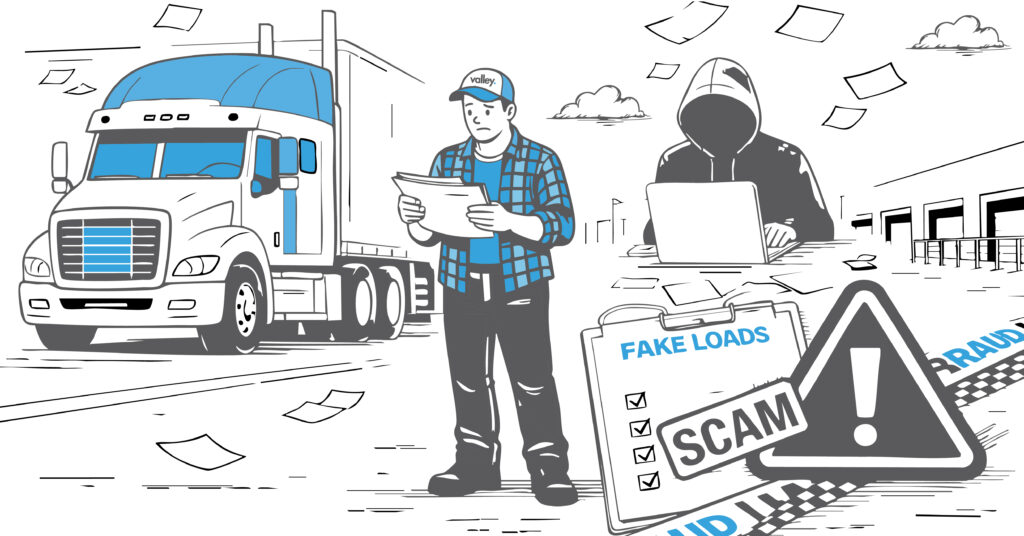
Key takeaway: Fake freight brokers are scammers who impersonate legitimate brokers to steal cargo, payments, or both. For trucking compaies, the real damage often comes after the theft, when insurance claims are delayed, denied, or reduced due to verification failures, policy exclusions, or preventable mistakes. This risk applies to owner-operators, new authorities, and established fleets alike.
Fake freight brokers are no longer a fringe problem. They are a daily operational threat for US trucking companies, especially in tight markets and high-value lanes.
The scam usually looks simple. A load appears legitimate. Rate con is signed. Pickup happens. Then the money disappears, the cargo vanishes, or both. What most owner-operators don’t expect is what comes next: an insurance claim that doesn’t go smoothly.
Load theft tied to fake freight brokers often triggers intense claim scrutiny. In many cases, fleet owners find out too late that their coverage does not respond the way they assumed.
What are fake freight brokers?
Fake freight brokers are individuals or groups that pose as licensed freight brokers without actually having proper authority or intent to pay.
Some operate with stolen MC numbers. Others create near-identical company names or email domains. Many hijack legitimate load postings and re-broker them illegally.
The Federal Motor Carrier Safety Administration has repeatedly warned trucking companies about broker identity theft and fraudulent authority misuse.
How fake freight broker scams work
Identity spoofing and double brokering
One of the most common schemes involves identity spoofing. The scammer copies the name, MC number, and reputation of a legitimate broker, then contacts you directly.
The trucking company believes they are hauling for a known broker. In reality, the scammer is sitting between the shipper and with no intent to pay.
Double brokering itself is not always illegal, but when done without authorization or with fraudulent intent, it becomes a gateway to theft and insurance disputes. The Transportation Intermediaries Association has documented widespread abuse of this practice.
Load hijacking tactics
In more aggressive cases, fake brokers arrange pickup details, then reroute the driver mid-trip. Cargo is delivered to an unauthorized location, often a temporary warehouse or drop yard.
From an insurance standpoint, this raises immediate questions about voluntary parting, entrustment, and due diligence.
Why these scams create insurance nightmares
Cargo claim denials
Cargo insurance is not automatic theft protection. Most policies require to demonstrate that reasonable verification steps were taken before accepting the load.
If the broker was unlicensed, impersonated, or clearly suspicious, insurers may argue that the loss falls outside covered theft provisions.
Voluntary parting exclusions are a frequent issue. If cargo was handed over based on fraudulent instructions, some policies limit or exclude coverage entirely. Always verify policy language and current interpretations with your broker.
Liability and theft exclusions
If stolen freight causes downstream damage, missed deliveries, or contractual penalties, general liability coverage may not respond.
Insurers will review broker vetting, documentation, email headers, payment records, and communication logs. Any inconsistency can delay or reduce payment.
The FBI has flagged cargo theft tied to organized fraud rings as a growing concern.
Red flags trucking companies should never ignore
- Broker emails that do not match the official domain
- Requests to change payment methods after pickup
- Pressure to rush paperwork or skip verification
- Load details that differ from posted confirmations
- Brokers unwilling to provide verifiable authority
FMCSA’s SAFER system remains one of the most reliable tools for authority checks.
How to protect your fleet from fake freight brokers
Start with process, not trust.
Verify broker authority every time, even for familiar names. Confirm contact details independently. Use written agreements. Document all instructions and route changes.
Avoid accepting loads that require mid-trip destination changes without written shipper confirmation. Train dispatchers and drivers to escalate anything unusual immediately.
Insurance companies expect owner-operators to act as professionals, not victims. Prevention matters.
What insurers look at after a stolen load
After a fake freight broker claim, insurers typically review:
- Broker authority verification steps
- Email and phone communication records
- Load confirmation accuracy
- Driver statements and GPS data
- Timing of loss reporting
Delays or gaps can weaken an otherwise valid claim. Early involvement of your insurance advisor can materially change outcomes.
Fake freight brokers aren’t just a fraud problem, they’re an insurance exposure problem. If your fleet hasn’t reviewed how broker verification, cargo coverage, and theft exclusions interact, now is the time. Valley Trucking Insurance helps trucking companies identify gaps before a stolen load turns into an uninsured loss.
FAQ
Are fake freight brokers illegal?
Yes, when operating without authority or committing fraud, they violate federal law.
Does cargo insurance always cover broker fraud?
No. Coverage depends on policy language, verification steps, and how the loss occurred.
Is double brokering always a scam?
No, but unauthorized or undisclosed double brokering is a major red flag.
Can new authorities be targeted more often?
Yes. Scammers frequently target new DOT numbers and inexperienced dispatch operations.
What should I do immediately after a suspected scam?
Secure documents, notify law enforcement, and contact your insurance advisor right away.
Does VTI help review broker risk?
Yes. Broker vetting and loss-prevention discussions are part of responsible fleet risk management.

Smarter Coverage. Real Support. No Hassle.