🔔 Announcement: American Trucking Insurance is now a part of Valley!
See details
🔔 Announcement: American Trucking Insurance is now a part of Valley!
See details

The Truth About “Cheap” Trucking Insurance and the Risks You Don’t See

Cameron Pechia / Dec 17, 2025
Reviewed by Cameron Pechia, Founder, WA Insurance License 71186
Last reviewed: 3/18/2026
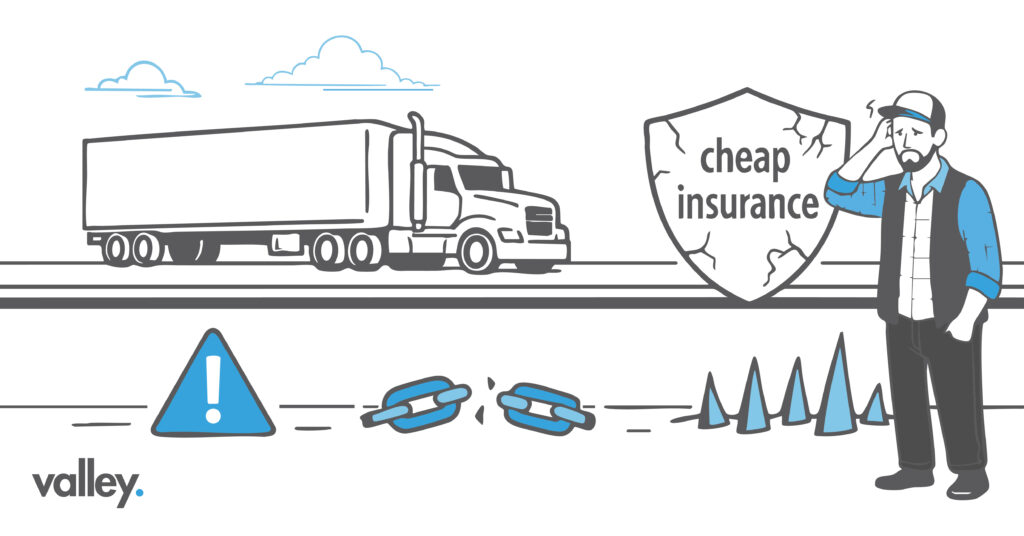
Everyone wants lower trucking insurance. When quotes come back high, it is tempting to jump at the cheapest option available. Many carriers do exactly that, especially new owner-operators or small fleets trying to survive tight margins. On paper, cheap insurance looks like a win. In reality, it often hides risks that do not show up until something goes wrong.
The truth is simple. Cheap trucking insurance is rarely cheap in the long run. The gaps, exclusions, delays, and weak claims handling can cost far more than the premium savings. Understanding what sits behind a low quote helps fleets avoid painful surprises and protect their business.
This guide breaks down what “cheap” trucking insurance really means, why those policies cost less, where the hidden risks live, and how carriers can make smarter decisions without overpaying.
Quick Answer
Cheap trucking insurance often comes with hidden gaps, higher deductibles, strict exclusions, slow claims handling, and limited coverage. These policies reduce upfront premiums but increase financial risk during accidents, cargo claims, or lawsuits. Fleets protect themselves by understanding coverage details, reviewing exclusions carefully, and choosing policies that match real operating risks rather than just price.
Why Cheap Trucking Insurance Exists
Insurance pricing reflects risk. When a policy is significantly cheaper than others, it indicates that there is a difference in coverage or terms. That difference is usually not a gift. It is a tradeoff.
1. Limited Coverage Scope
Low-cost policies often cover only the bare minimum required to operate. Anything beyond that is excluded or restricted. This includes cargo types, operating radius, driver qualifications, and specific loss scenarios.
2. Higher Deductibles
Cheap policies frequently push more risk onto the carrier. Higher deductibles lower premiums but increase out-of-pocket costs when claims happen. A deductible that looks manageable on paper can become painful after multiple incidents.
3. Narrow Underwriting Appetite
Some insurers focus on very specific risks. They may offer low prices but only cover limited operations. If a fleet grows, changes lanes, or hauls different freight, coverage gaps appear.
4. Aggressive Claims Controls
Lower premiums often come with stricter claims handling. Insurers may dispute claims, delay payments, or deny coverage based on technical details.
Where the Hidden Risks Live
Cheap insurance usually looks fine until the first serious incident. That is when the risks appear.
Exclusions You Did Not Notice
Many low-cost policies contain exclusions buried deep in the wording. These may include:
- Certain cargo types
- Driver age or experience limits
- Specific states or regions
- Night driving restrictions
- Independent contractor limitations
If a claim falls inside an exclusion, the carrier pays the full cost.
Slow or Difficult Claims Handling
Claims service matters. When accidents happen, delays increase costs. Towing, storage, legal fees, and downtime add up quickly. Policies with slow claims handling often cost more overall despite lower premiums.
Renegade explains how claims disputes and delays increase financial exposure for carriers in their overview of commercial auto coverage risks, available in this article.
Inadequate Liability Limits
Some cheap policies meet minimum legal requirements but fall short in real-world accidents. Severe crashes often exceed minimum limits, leaving carriers exposed to lawsuits and personal liability.
Weak Defense Support
Insurance is not just about paying claims. It is also about legal defense. Cheap policies may offer limited legal support, weaker defense teams, or slower response times.
Poor Fit for Real Operations
Many fleets change faster than their insurance. New lanes, new customers, new cargo, or new drivers can quietly void coverage if the policy does not match operations exactly.
Real-World Scenarios
These examples show how cheap insurance creates expensive problems.
The Low Premium, High Deductible Trap
A small fleet chose the cheapest policy available. The deductible was three times higher than industry norms. Within six months, they had two minor accidents. The total out-of-pocket cost exceeded the premium savings for the entire year.
The Cargo Exclusion Surprise
An owner-operator hauled general freight but accepted a last-minute load that included electronics. The policy excluded high-value electronics. When the cargo was damaged, the claim was denied entirely.
The Slow Claims Spiral
After a minor crash, a carrier waited weeks for claim approval. The truck sat in a tow yard accumulating storage fees. By the time the claim was settled, the extra costs exceeded the original repair estimate.
How Cheap Insurance Impacts Your Business Long Term
The cost of insurance is not limited to premiums. Poor coverage affects reputation, cash flow, and growth.
1. Cash Flow Strain
Unexpected claim costs drain reserves quickly. Even one uncovered incident can destabilize a small fleet.
2. Broker and Shipper Confidence
Brokers and shippers expect reliable coverage. Claims disputes or unpaid losses damage trust and reduce future opportunities.
3. Renewal Pain
Carriers with disputed claims, uncovered losses, or frequent out-of-pocket payments often face higher renewal rates later. The cheap policy becomes a long-term liability.
4. Growth Limitations
Cheap policies often limit expansion. New lanes or cargo require policy changes that trigger price increases or cancellations.
What Insurers Look At Beyond Price
Insurance carriers evaluate far more than premium.
Claims History
Frequent claims signal higher risk. Poor claims handling magnifies the impact.
Safety Practices
Training, maintenance, telematics, and documentation matter. The FMCSA outlines how vehicle condition and safety programs reduce crash risk in their guidance on vehicle maintenance and safety.
Documentation Discipline
Clean records reduce disputes. Missing paperwork creates friction and suspicion.
Operational Consistency
Stable operations are easier to insure. Rapid changes without updates increase risk.
How to Compare Insurance the Right Way
Price matters, but it should never stand alone.
1. Review Coverage Details Carefully
Look beyond the premium. Review limits, deductibles, exclusions, and endorsements.
2. Ask About Claims Handling
How fast are claims processed? Who handles them? What support is provided?
3. Match Coverage to Operations
Ensure the policy matches what you actually do, not what you used to do.
4. Understand Deductible Impact
Model worst-case scenarios. Make sure your business can absorb the deductible multiple times if needed.
5. Work With Knowledgeable Advisors
Experienced insurance advisors explain tradeoffs clearly and help avoid hidden risks.
Common Mistakes Fleets Make
Avoid these errors when chasing cheap insurance.
- Choosing price over coverage
- Skipping policy reviews
- Ignoring exclusions
- Underestimating deductibles
- Failing to update insurers on changes
- Assuming all policies work the same
These mistakes cost far more than premium savings.
How to Lower Costs Without Cutting Protection
Lower premiums are possible without sacrificing coverage.
1. Improve Safety Programs – Fewer incidents lead to better rates.
2. Use Technology – Telematics, dash cams, and tracking improve risk profiles.
3. Maintain Clean Records – Documentation builds trust with insurers.
4. Review Policies Annually – Adjust coverage as operations change.
5. Communicate Improvements – Show insurers what you have done to reduce risk.
The National Association of Insurance Commissioners explains how risk management and documentation influence insurance pricing in their consumer guidance available through the NAIC.
Final Thoughts
Cheap trucking insurance feels good at purchase time. It feels completely unique during a claim. The lowest premium often hides higher risk, weaker protection, and costly surprises.
Smart fleets treat insurance as a business tool, not just an expense. They balance price with protection, understand their policies, and choose coverage that supports long-term stability.
Review your current policy today. Look at exclusions, deductibles, and claims support. If you’re uncertain about your coverage, now’s the right moment to inquire. The right insurance does not just save money, it protects your business when it matters most. If you want a clear, no-nonsense review of your current coverage and a quote that reflects how your business actually operates, request one here.
FAQs
Is cheap trucking insurance always bad?
Not always, but it often comes with tradeoffs that carriers do not see upfront.
Why do some policies look much cheaper than others?
They usually limit coverage, raise deductibles, or exclude certain risks.
Can cheap insurance hurt future rates?
Yes. Claims disputes and uncovered losses raise long-term costs.
How many policies should I compare?
At least three, with a focus on coverage details, not just price.
What is the biggest hidden risk?
Exclusions that deny coverage when a claim occurs.

Smarter Coverage. Real Support. No Hassle.